






What's Happening?
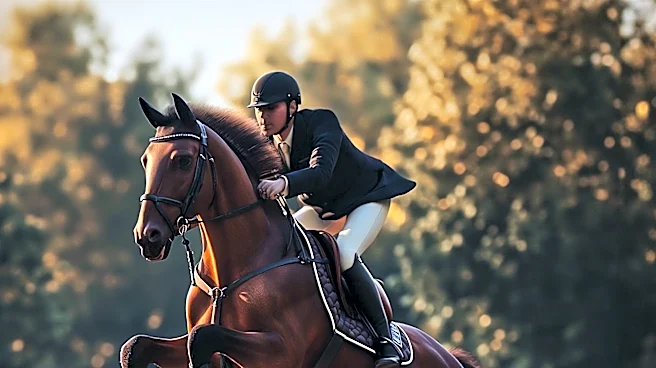
David O’Connor, an Olympic gold medalist and influential figure in equestrian sports, continues to significantly impact the U.S. eventing scene through various leadership roles and mentorship initiatives. After retiring from competitive riding in 2004,
O’Connor transitioned into governance, serving two consecutive terms as President of the United States Equestrian Federation (USEF) from 2004 to 2012. He also held a position on the FEI Bureau from 2008 to 2011, where he contributed to modernizing rules and embedding horse-welfare language into policies. In 2013, he became the Chef d’Equipe and Technical Advisor for the Land Rover U.S. Eventing Team, leading them to team gold and individual silver at the 2015 Pan American Games and the nation’s first Olympic eventing medal in twelve years at Rio 2016. His methods, which emphasize athlete-first philosophy, data-driven selection, and horse welfare, remain a template for USEF High Performance planning. In 2021, the FEI General Assembly confirmed O’Connor as Chair of the Eventing Committee through 2025, and in late 2024, he was appointed to the FEI Executive Board, giving him a direct vote on multidisciplinary governance and equine welfare budgeting. Additionally, in October 2022, USEF created the strategically focused position of Chief of Sport for O’Connor, overseeing all high-performance disciplines and aligning sport integrity with equine welfare initiatives.
Why It's Important?
David O’Connor's continued involvement is crucial for the advancement and integrity of U.S. equestrian sports. His leadership ensures that horse welfare remains a central tenet in policy-making and training, influencing safety regulations and ethical practices from grassroots levels to international competitions. By serving on the FEI Eventing Committee and Executive Board, O’Connor directly shapes global rules and budgeting for equine welfare, which has a direct impact on U.S. riders and horses competing internationally. His role as USEF Chief of Sport consolidates efforts across high-performance disciplines, fostering a unified approach to athlete development and horse care. Furthermore, his mentorship of emerging riders, such as Mia Farley and Lauren Nicholson, and his involvement in programs like the USEA Emerging Athletes U21 (EA21) talent-identification program, are vital for cultivating the next generation of U.S. equestrian talent. This ensures a continuous pipeline of skilled riders who are also instilled with a strong foundation in horse-first principles, thereby sustaining the competitive edge and ethical standards of U.S. equestrianism on the world stage.
What's Next?
O’Connor's influence is set to continue through his various appointments. As Chair of the FEI Eventing Committee until 2025 and a member of the FEI Executive Board until 2026, he will play a direct role in shaping global rule changes, equine and rider safety research, and risk-management policies. Domestically, his position as USEF Chief of Sport will ensure the ongoing alignment of sport integrity and equine welfare initiatives with the federation’s strategic planning. Starting in 2025, O’Connor will also join the organizing committee for the Kentucky Horse Park Foundation for three revamped horse trials, where he will design cross-country tracks. This involvement will strengthen the eventing grassroots pipeline, providing opportunities for new riders while maintaining modern safety standards. His ongoing mentorship through programs like the USEA Emerging Athletes U21 and the Eventing Coaches Program Symposium will continue to disseminate his horse-first philosophy and evidence-based training methods across all levels of U.S. equestrian sport.
Beyond the Headlines
Beyond his official titles, O’Connor's impact extends to fostering a culture of mindful horsemanship and ethical responsibility within the equestrian community. His emphasis on clear communication, balanced training, ample turnout, and nutrition for longevity, as highlighted in US Equestrian’s “A Good Life for Horses” video series, promotes a holistic approach to equine well-being. This focus on the horse's physical and mental health not only enhances performance but also addresses broader ethical concerns regarding animal welfare in competitive sports. By integrating welfare language into every USEF policy update, tightening medication rules, and funding rider safety research, O’Connor is driving a long-term shift towards a more humane and sustainable model for equestrianism. His dedication to educating both elite and developing riders, as well as everyday horse owners, ensures that these principles are deeply embedded, creating a legacy that prioritizes the horse above all else and continually raises the bar for the entire industry.