




What's Happening?
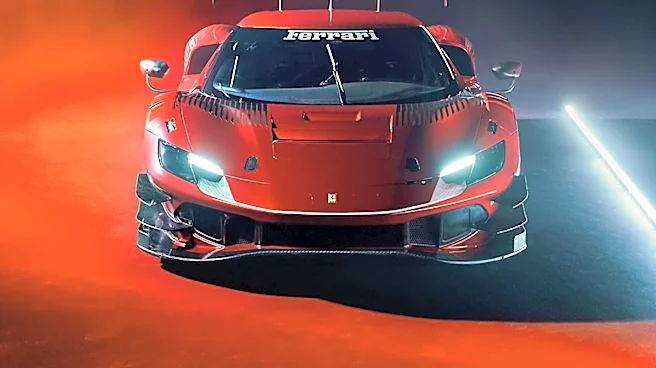
Ferrari has introduced the 296 Challenge Stradale (CS), a new track-focused road car that draws heavily from its 296 Challenge Evo race car counterpart. This model marks the return of the Challenge Stradale badge, last seen in 2004 with the 360 CS. Unlike
previous track-centric Ferraris, the 296 CS prominently displays its aerodynamic elements, including a carbon-fiber rear wing, dive planes, and an adjustable front splitter, many of which are adapted from the Challenge Evo for road legality. Mechanically, the 296 CS ditches the hybrid system found in the standard 296GTB, opting for a pure twin-turbo 3.0-liter V-6 engine that produces 670 horsepower. This removal of hybrid components contributes to a significant weight reduction of 328 pounds compared to the 296GTB. The car also features an enlarged rear carbon-ceramic brake system to compensate for the lack of regenerative braking and a newly developed suspension derived from the 296 Challenge Evo. Ferrari intends for the 296 CS to attract new buyers seeking a pure driving experience, as it is a standard range model, unlike the special series 296 Speciale which requires an existing relationship with the brand.
Why It's Important?
The introduction of the Ferrari 296 Challenge Stradale signifies a strategic shift for the luxury automaker, aiming to broaden its customer base for high-performance, track-inspired vehicles. By making the 296 CS a standard range model, Ferrari is opening access to a segment of enthusiasts who may not have the established brand relationship typically required for special series allocations. This move could attract new affluent buyers to the Ferrari brand, potentially increasing market share in the ultra-luxury sports car segment. The emphasis on a 'pure driving experience' through the removal of hybrid components also caters to a niche within the performance car market that values traditional, unassisted internal combustion engines. This could influence future design and marketing strategies for other high-end manufacturers, as they observe Ferrari's success in appealing to both traditionalists and new clientele. The U.S. market is a significant target, with deliveries expected to begin in late 2027, indicating Ferrari's continued focus on this key region for luxury vehicle sales.
What's Next?
The Ferrari 296 Challenge Stradale is expected to go on sale in the U.S. in the third quarter of 2027, with an estimated price of around $320,000. As a standard range model, its production numbers are not limited, which could lead to a more accessible purchasing process for interested buyers compared to Ferrari's exclusive special series. The market will closely watch the reception of this model, particularly how it performs in attracting new customers to the brand without cannibalizing sales of existing models like the 296 Speciale. Ferrari's decision to reintroduce a purely combustion-engined, track-focused road car may also influence future product development within the company, potentially leading to more models that prioritize raw driving dynamics over hybrid integration. Competitors in the luxury sports car market will likely observe the sales performance and customer feedback of the 296 CS to gauge the demand for such 'pure' driving experiences in an increasingly electrified automotive landscape.
Beyond the Headlines
The launch of the 296 Challenge Stradale reflects a broader trend in the automotive industry where manufacturers are balancing the push towards electrification with a desire to preserve traditional driving experiences. Ferrari's decision to remove the hybrid system from the 296 CS, despite its presence in the base 296GTB, highlights a strategic acknowledgment of a segment of enthusiasts who prioritize mechanical purity and weight reduction over hybrid performance gains. This could be seen as a response to a growing sentiment among some car enthusiasts who feel that modern vehicles, with their increasing complexity and electronic aids, dilute the raw driving experience. Furthermore, by making this high-performance model more accessible to new buyers, Ferrari is subtly shifting its brand exclusivity strategy, potentially aiming to cultivate a new generation of loyal customers. This move could have long-term implications for how luxury brands manage exclusivity versus market expansion in an evolving automotive landscape.