

What's Happening?
Daejon Love was arrested on August 24 in Boise, Idaho, for allegedly defrauding women of approximately $1.3 million. A significant aspect of the alleged scam involved Love posing as a San Francisco 49ers player. This incident has garnered widespread attention,
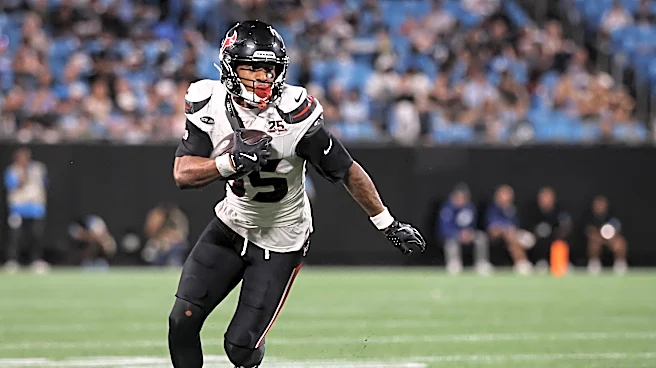
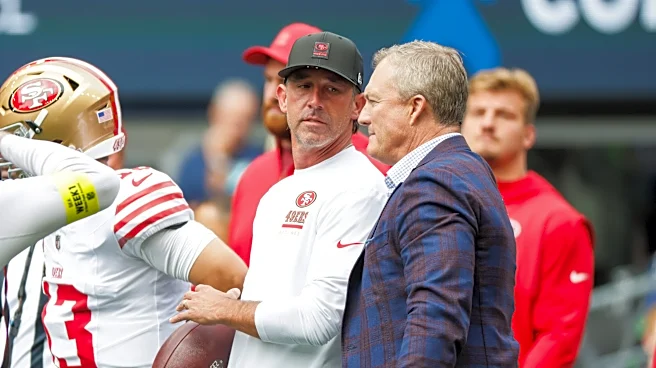
leading to humorous responses from both current and former NFL players and coaches, particularly those associated with the 49ers. The far-fetched nature of the allegations has sparked a trend of lighthearted commentary across social media platforms. For instance, San Francisco wide receiver coach Leonard Hankerson posted an AI-generated image on Instagram depicting him 'coaching' the fictional player. Former 49ers wideouts Kendrick Bourne and Torrey Smith commented on Hankerson's post, adding to the jest. Additionally, former 49ers safety Logan Ryan shared a TikTok video showing him performing daily errands while wearing a helmet, and former San Francisco tight end Vernon Davis also posted multiple videos on Instagram and TikTok, making fun of the situation. The humor extended to 49ers rookie De'Zhaun Stribling, who changed his jersey number from 15 to 7, the number Love allegedly wore in his fake 'workout' videos, further fueling the ongoing joke.
Why It's Important?
This incident, while serious in its legal implications, highlights the intersection of sports, public perception, and social media in contemporary culture. The alleged scam, which leveraged the prestige and public image associated with being an NFL player, underscores the potential for individuals to exploit such affiliations for fraudulent purposes. The subsequent humorous reactions from NFL figures, including current and former 49ers players and coaches, demonstrate how the sports community can engage with and even satirize unusual or scandalous events. This collective response, while seemingly lighthearted, also serves to distance the legitimate organization and its personnel from the alleged actions of an imposter. It also illustrates the power of social media in amplifying news and facilitating rapid, widespread reactions, shaping public discourse around such incidents. The incident could prompt greater scrutiny of individuals claiming affiliations with professional sports teams, potentially leading to increased verification efforts by those interacting with such claims.
What's Next?
The legal proceedings against Daejon Love are expected to continue following his arrest. The focus will likely be on the investigation into the alleged $1.3 million scam and the evidence presented by prosecutors. From the perspective of the NFL and the San Francisco 49ers, the organization may continue to monitor the situation, though their public response has largely been indirect through the reactions of their associated personnel. The humorous social media trend among players and coaches is likely to subside as the initial novelty wears off, but the incident may serve as a cautionary tale regarding identity fraud and the misuse of professional affiliations. It could also lead to informal discussions within sports organizations about how to address or prevent similar impersonation attempts in the future, particularly given the ease with which individuals can create convincing online personas.
Beyond the Headlines
Beyond the immediate legal and social media reactions, this event touches upon deeper themes of identity, trust, and the allure of celebrity. The alleged scammer's ability to convince multiple women by posing as a 49ers player speaks to the powerful cultural capital associated with professional athletes. This incident could prompt a broader conversation about digital literacy and critical evaluation of online identities, especially when significant financial or personal stakes are involved. It also subtly highlights the vulnerability of individuals to sophisticated scams that exploit aspirational connections or perceived status. The collective humor from the NFL community, while a coping mechanism, also reflects a broader societal tendency to use satire to process and distance from unsettling events. This case may contribute to a growing awareness of the need for due diligence in online interactions, particularly in an era where digital personas can be easily fabricated or manipulated.