






What's Happening?
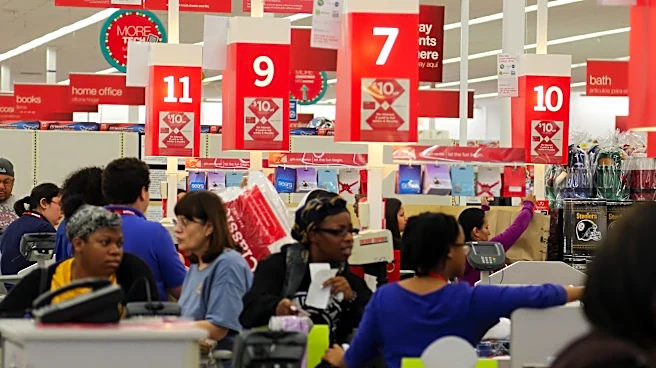
US retailers are accelerating their import schedules from China, moving up orders by four to six weeks to secure stock for Black Friday and Christmas. This shift is driven by concerns over potential tariff increases later in the year. The early import surge
has led to increased container rates and tightened shipping capacity on China-US routes. President Trump's recent visit to China maintained a temporary detente, but retailers remain wary of tariff hikes. A 10% US tariff imposed in February is set to expire on July 24, with a proposed 12.5% tariff on imports from China and other countries under consideration. This has prompted retailers to act swiftly to protect their holiday inventories.
Why It's Important?
The early import rush highlights the ongoing uncertainty in US-China trade relations and its impact on the retail sector. Retailers are facing increased costs due to higher container rates and limited shipping capacity, which could affect pricing and availability of goods during the crucial holiday season. The potential tariff increases could further strain the retail industry, which is already navigating a volatile trading environment. This situation underscores the broader economic implications of trade policies and their direct impact on consumer markets and supply chains.
What's Next?
Retailers will continue to monitor trade developments closely, particularly the expiration of the current tariff and the potential implementation of new tariffs. The outcome of these trade negotiations will significantly influence retail strategies and pricing decisions. Additionally, the industry may advocate for more stable trade policies to mitigate future disruptions. Stakeholders, including shipping companies and consumer advocacy groups, are likely to engage in discussions to address the challenges posed by fluctuating trade policies.