



What's Happening?
Kathryn Polkoff, an alumna of the University of Illinois Urbana-Champaign, is leading efforts to combat methane emissions from cattle through her biotech startup, Hoofprint Biome. As co-founder and CEO, Polkoff's company develops enzymes designed to reduce
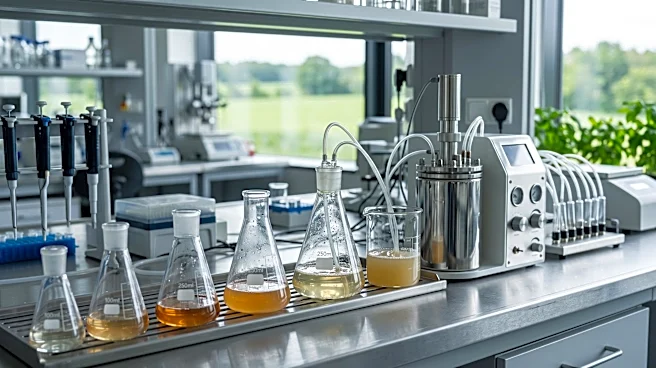
methane production and enhance digestive health in cows. Methane from cattle is identified as a significant contributor to global warming, and Hoofprint Biome's mission is to make livestock production more sustainable and efficient. Polkoff's journey began with an interest in large-animal veterinary medicine but shifted towards biotechnology after working in Professor Matthew Wheeler’s research lab at the University of Illinois. Her earlier research involved using CRISPR technology for gene editing in beef and dairy cattle to address genetic defects, improve milk yield, and enhance climate adaptability. Hoofprint Biome has secured investor funding for its research and development facility and currently employs 12 individuals, focusing on scaling the production of natural enzymes and probiotics through yeast fermentation for use as a feed additive.
Why It's Important?
The initiative by Hoofprint Biome is significant for the U.S. agricultural sector and environmental sustainability. Methane emissions from livestock represent a substantial portion of greenhouse gas emissions, contributing to climate change. By developing enzymes that reduce methane and improve digestive health in cattle, Hoofprint Biome offers a potential solution to mitigate the environmental impact of the beef and dairy industries. This innovation could lead to more sustainable livestock production practices, which are crucial for meeting climate goals and consumer demands for environmentally friendly products. Furthermore, improving digestive health and feed efficiency in cattle could translate into economic benefits for farmers through reduced feed costs and increased productivity. The success of such biotech solutions could also position the U.S. as a leader in agricultural innovation, fostering new research and development in sustainable farming technologies.
What's Next?
Hoofprint Biome is currently focused on scaling the production of its natural enzymes and probiotics. The company aims to deliver these products as a feed additive to improve digestive health and feed efficiency in cattle. The ultimate goal is to distribute these products globally, advancing sustainable cattle production worldwide. This will likely involve further research, development, and testing to ensure efficacy and safety across various cattle breeds and farming conditions. The company will also need to navigate regulatory approvals for its products in different markets. Potential next steps include securing additional funding, expanding its team, and forming partnerships with agricultural organizations and feed companies to facilitate wider adoption of its technology. The broader agricultural industry will be watching closely to see the impact of these innovations on methane reduction and livestock efficiency.
Beyond the Headlines
The work of Hoofprint Biome touches upon several deeper implications beyond immediate methane reduction. Ethically, it raises questions about the role of biotechnology in animal agriculture and the balance between environmental benefits and potential alterations to natural biological processes. Legally, the development and deployment of such feed additives will require robust regulatory frameworks to ensure product safety, efficacy, and environmental impact. Culturally, the adoption of biotech solutions in livestock farming could shift public perceptions of food production, potentially leading to increased acceptance or resistance depending on transparency and communication. Long-term, this development could signal a broader shift towards precision agriculture and bio-engineering as primary tools for addressing environmental challenges in food systems, potentially influencing future agricultural policies and investment priorities in sustainable technologies.