




What's Happening?
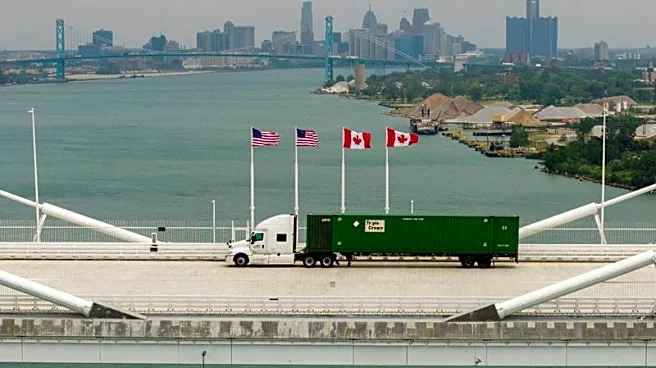
A trade deal between the United States and Canada has collapsed at the last minute, leading to the implementation of President Trump's 50% tariffs on Canadian products. The tariffs, affecting approximately $28 billion worth of Canadian goods imported
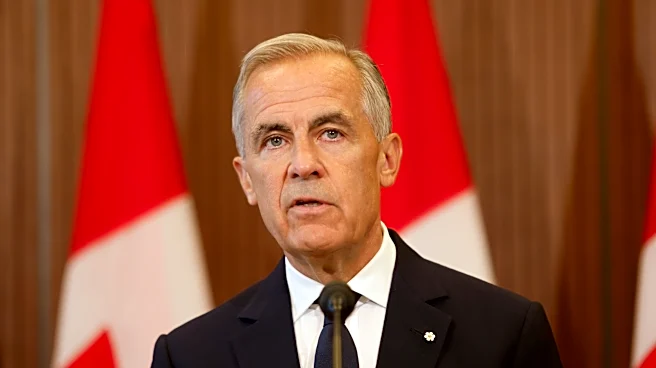
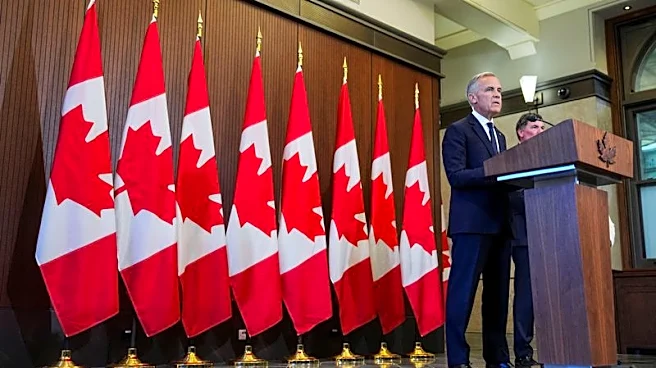
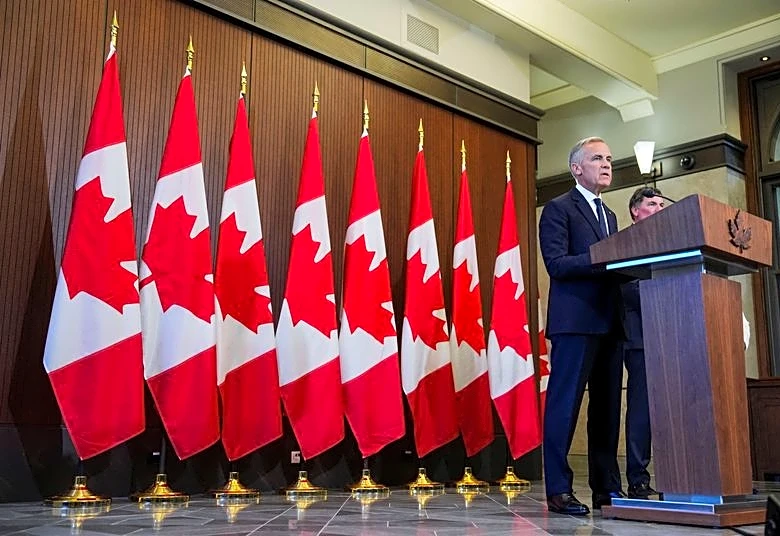
into the U.S., went into effect overnight after negotiations failed to reach a resolution before President Trump's Friday night deadline. In response, Canadian Prime Minister Mark Carney announced that Canada would impose matching tariffs, dollar for dollar, on U.S. goods entering Canada. This development marks a significant reversal from earlier in the week when President Trump had indicated that an agreement had been reached to avoid the tariff crackdown. Prime Minister Carney stated that Canada withdrew from negotiations due to 'last-minute changes' in the U.S. proposed terms, which he deemed 'unfair, uneconomic, and called into question the reliability of any deal.' Conversely, the office of U.S. Trade Representative Jamieson Greer asserted that Canada walked away from terms previously agreed upon, citing 'new demands and walk backs of other commitments' by Canada.
Why It's Important?
The imposition of 50% tariffs by both the U.S. and Canada signifies a major escalation in trade tensions between the two neighboring countries. This move will likely have substantial economic repercussions for industries in both nations. U.S. consumers could face higher prices for Canadian imports, ranging from automobiles to dairy products and alcohol, while Canadian consumers will experience similar impacts on U.S. goods. Businesses reliant on cross-border supply chains will face increased costs and potential disruptions, which could lead to reduced profitability, job losses, or shifts in sourcing strategies. The collapse of the deal also undermines the stability of trade relations, creating uncertainty for investors and businesses operating in North America. The tit-for-tat tariff response indicates a hardening stance from both sides, suggesting a prolonged period of trade friction rather than a quick resolution.
What's Next?
With tariffs now in effect, both U.S. and Canadian businesses will begin to feel the immediate impact of increased costs and reduced trade volumes. Industries heavily reliant on cross-border trade, such as automotive, agriculture, and manufacturing, are expected to lobby their respective governments for relief or a swift resolution. It remains unclear when or if negotiations will resume, given the differing accounts of why the deal collapsed. The mutual imposition of tariffs could lead to a further deterioration of diplomatic and economic relations. Stakeholders will be closely watching for any signals from either government regarding future trade talks or potential retaliatory measures beyond the initial tariffs. The situation could also influence broader trade policy discussions and alliances, as both countries may seek to diversify their trade partners.
Beyond the Headlines
The breakdown of this trade deal highlights the fragility of international trade agreements and the significant leverage that tariff threats can exert in negotiations. The differing narratives from U.S. and Canadian officials regarding the collapse of the deal underscore the complexities and potential for miscommunication or strategic posturing in high-stakes trade talks. Beyond the immediate economic impact, this trade dispute could foster a sense of economic nationalism in both countries, encouraging domestic production over imports. It also raises questions about the future of integrated North American supply chains, which have been a cornerstone of economic efficiency for decades. The long-term implications could include a re-evaluation of trade dependencies and a push towards greater self-sufficiency, potentially altering the economic landscape of the continent for years to come.