


What's Happening?
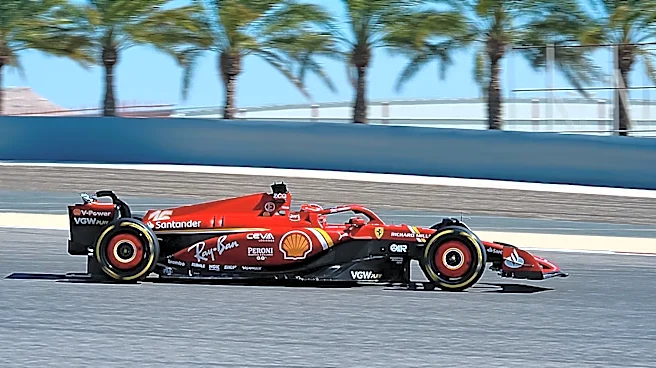
Charles Leclerc, the Ferrari driver, has expressed confidence that his team can achieve another victory before the conclusion of the 2026 Formula 1 season. This optimism follows his consecutive second-place finishes at the Singapore and United States
Grands Prix. Leclerc attributes this renewed belief to recent advancements in the car's performance and strategic upgrades. Ferrari introduced upgrades to its SF-26 car in Austin, where Leclerc secured his second consecutive podium. Further developments are anticipated for the upcoming Mexican Grand Prix, as the team aims to build on its recent progress in the final races of the season. Leclerc noted that he feels significantly more comfortable with the car, having 'unlocked something again in terms of driving, and particularly set-up with my driving' over the past few races. Despite this positive outlook, he acknowledges that converting this improved performance into a win will also depend on how rival teams develop their cars.
Why It's Important?
Leclerc's confidence in Ferrari's potential for another win is significant for the competitive landscape of the 2026 Formula 1 season, particularly for the U.S. Grand Prix, which is a key event in the F1 calendar. A stronger Ferrari performance could intensify competition at the top, potentially impacting viewership and engagement in the U.S., where Formula 1 has been growing in popularity. For Ferrari, securing additional victories would bolster its standing in the Constructors' Championship and enhance its brand image globally, including in the lucrative American market. The team's ability to consistently challenge for podiums and wins, especially after introducing upgrades, demonstrates a positive trajectory that could attract more sponsors and investment. Conversely, if Ferrari fails to convert this confidence into wins, it could lead to disappointment among its fanbase and raise questions about the effectiveness of their development strategy, potentially affecting future commercial opportunities in the U.S. and beyond.
What's Next?
Ferrari is expected to introduce further upgrades at the Mexican Grand Prix, providing another opportunity to assess their progress and potentially challenge for a win. Leclerc's focus will be on maximizing the car's performance and addressing the qualifying weaknesses that have hindered their chances. The team will need to investigate and resolve the issue of bringing tires into the optimal operating window during qualifying, especially as track temperatures fluctuate. The outcome of the upcoming races will be crucial in determining whether Ferrari can capitalize on its recent improvements and secure another victory. The performance of rival teams, and their own upgrade plans, will also play a significant role in Ferrari's ability to contend for wins. The team's strategy for the remaining races will likely involve a delicate balance of aggressive development and meticulous race execution to achieve their goal.
Beyond the Headlines
Beyond the immediate race results, Leclerc's comments highlight the intricate balance between driver skill, car development, and strategic execution in Formula 1. His emphasis on 'unlocking something' in his driving and setup suggests a deeper synergy between driver and machine, which is critical for sustained success. The challenge Ferrari faces with tire temperature management in qualifying, despite strong practice sessions, points to a fundamental engineering puzzle that can differentiate top teams. This issue underscores the highly technical nature of modern F1, where marginal gains in understanding and optimizing complex systems can have significant impacts on race outcomes. The ongoing development race among teams, with each introducing upgrades, reflects a continuous cycle of innovation and adaptation. This relentless pursuit of performance not only drives technological advancements but also shapes the narratives and rivalries that captivate fans worldwide, including the growing U.S. audience.