


What's Happening?
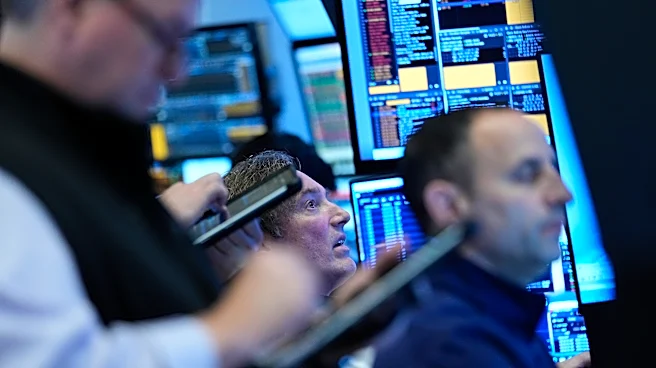
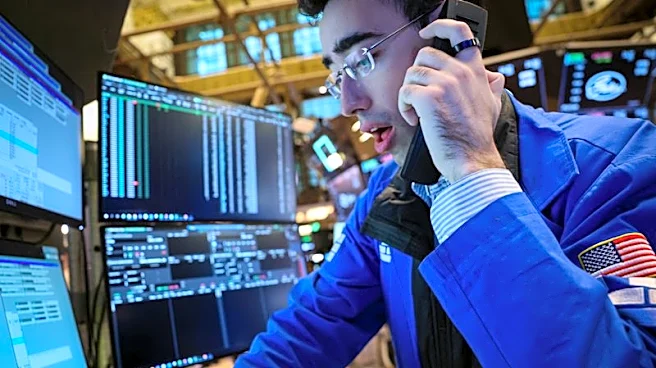
The S&P 500 has entered correction territory, defined as a decline of 10% or more from a recent closing high, after experiencing one of its worst weeks in history. The index fell 8.6% and closed below 7,000 for the first time since April, ending Friday
down 3.7%. This market downturn is attributed to several factors, including investor concerns over rising interest rates impacting the AI infrastructure build-out, a backlash against data centers following recent midterm elections, and a crisis at Nvidia. The Nvidia crisis involves the resignation of CEO Jensen Huang, ongoing investigations into chip exports to China, and an accounting investigation by the SEC. The last correction for the S&P 500 occurred in March-April 2025, driven by concerns over President Trump's tariffs and a potential trade war.
Why It's Important?
The S&P 500 entering correction territory signals significant volatility and potential instability in the U.S. stock market, impacting investors and the broader economy. Historically, corrections occur approximately every 1.5 years, with an average decline of 17%. While the S&P 500 has always recovered from past corrections, the current drivers, particularly the collapse of the AI trade and the crisis at Nvidia, highlight vulnerabilities in a previously high-growth sector. Rising interest rates could squeeze the profitability of AI infrastructure, affecting companies in the neocloud sector. The backlash against data centers and the investigations into Nvidia could lead to regulatory changes and impact the technology industry's growth trajectory, potentially affecting job creation and investment in innovation.
What's Next?
Investors are advised to remain calm, as corrections are a normal part of market cycles. However, this period presents an opportunity for investors with available cash to identify and potentially acquire undervalued stocks. The market will likely continue to react to developments concerning interest rates, the regulatory environment for data centers, and the ongoing investigations into Nvidia. The duration of this correction is uncertain, but historically, the average time from a market bottom to a new peak has been around 6.1 months. Future market performance will depend on how these underlying issues evolve and whether investor confidence in the AI sector can be restored, despite current fears of an AI bubble.
Beyond the Headlines
The current market correction extends beyond typical economic cycles, touching upon deeper implications for the technology sector and U.S. economic policy. The 'AI trade collapse' and the crisis at Nvidia could signal a re-evaluation of the rapid growth and valuation of AI-related companies. This could lead to increased scrutiny of corporate governance and financial reporting within the tech industry, particularly given the SEC's accounting investigation into Nvidia. Furthermore, the 'backlash against data centers' post-midterm elections suggests a growing public and political concern regarding the environmental impact, energy consumption, and potentially monopolistic practices of large tech infrastructure, which could lead to new regulations and shifts in how these essential facilities are developed and operated in the U.S.