


What's Happening?
Ford Motor Co.'s Formula 1 racing program, in its first year back as a powertrain partner to Red Bull Racing, has experienced 'mixed' results, according to Mark Rushbrook, Ford Racing's global director. The company supplies engines to both Oracle Red Bull Racing and
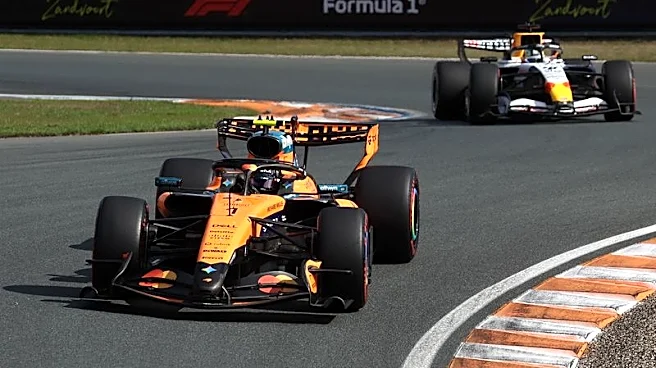
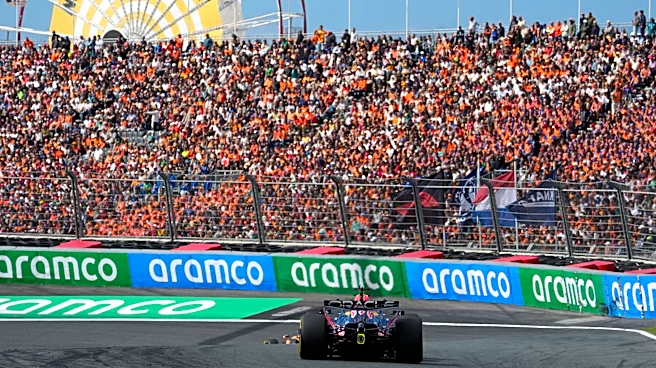
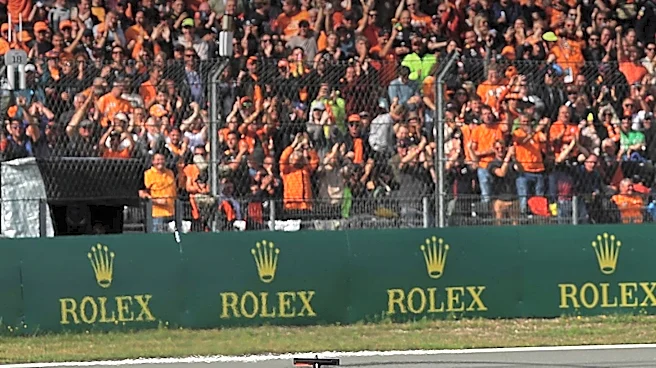
Visa Cash App Racing Bulls. Recent performances at the Dutch Grand Prix saw the teams finish 7th, 11th, and 12th, with driver Max Verstappen failing to finish. Despite this, Verstappen has achieved podium finishes, including a second place at the Australian and Hungarian Grands Prix this season. Rushbrook expressed contentment with racing among the top four teams and emphasized ongoing efforts to improve and secure first-place finishes in preparation for the 2027 season. The collaboration with Red Bull Racing is viewed as a valuable learning experience for Ford's engineers, contributing to product development, even if direct race car components don't transfer to consumer vehicles.
Why It's Important?
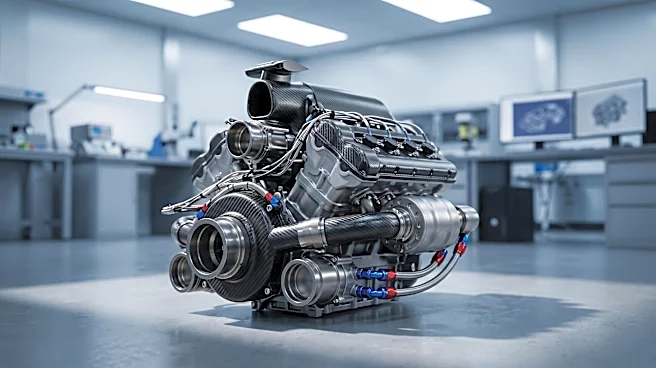
The involvement of Ford Racing in Formula 1, particularly as a powertrain partner to Red Bull Racing, signifies a strategic investment in advanced automotive technology and engineering expertise. While the immediate race results may be 'mixed,' the long-term benefits for Ford are substantial. The high-pressure and fast-paced environment of F1 provides an unparalleled training ground for engineers, fostering innovation and problem-solving skills that can be directly applied to Ford's consumer vehicle development. This technology transfer, though not always in the form of direct component adoption, enhances the overall engineering capabilities and knowledge base within the company. This initiative positions Ford to potentially develop more competitive and technologically advanced vehicles in the future, impacting its market standing and product offerings. The collaboration also elevates Ford's brand image globally, associating it with cutting-edge motorsport and performance.
What's Next?
Ford Racing will continue its partnership with Red Bull Racing, focusing on improvements to achieve first-place finishes as they prepare for the 2027 season. Engineers who have gained experience from the F1 program in Milton Keynes, U.K., are returning to Dearborn, bringing valuable insights that are expected to cycle through Ford's product development over the next five to ten years. This ongoing transfer of knowledge and expertise will likely lead to advancements in Ford's consumer vehicles. The company will continue to leverage the F1 platform for brand exposure and to attract top engineering talent. Future race results will be closely watched as an indicator of the partnership's progress and the effectiveness of the technological learnings being applied.
Beyond the Headlines
Beyond the immediate competitive outcomes, Ford's engagement in Formula 1 with Red Bull Racing represents a deeper commitment to pushing the boundaries of automotive engineering. The 'mixed' results highlight the intense competition and the continuous need for innovation in F1, which serves as a crucible for developing advanced powertrain technologies and aerodynamic efficiencies. The experience gained by Ford's engineers in this demanding environment can foster a culture of rapid iteration and high-performance design within the company. This long-term investment in human capital and technological know-how could lead to breakthroughs in areas such as fuel efficiency, hybrid powertrains, and advanced materials, ultimately benefiting the broader automotive industry and consumers through more efficient and capable vehicles. The collaboration also underscores the increasing convergence of motorsport and mainstream automotive development, where racing serves as a vital testbed for future mobility solutions.