







What's Happening?
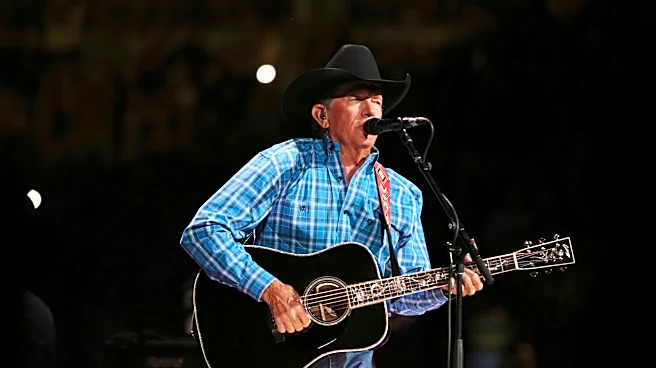
Country music legend George Strait has announced that he is no longer actively pursuing new hit songs on country radio. This declaration comes after he received the Nashville Songwriters Hall of Fame's Career Maker Award, making him only the second recipient
after Reba McEntire. Strait's latest album, 'Cowboys and Dreamers,' released in 2024, featured songs like 'Three Drinks Behind' and 'Honky Tonk Hall of Fame' with Chris Stapleton, and reached No. 6 on the U.S. Top Country Albums chart. Despite this recent success, Strait stated his focus has shifted to reflecting on his achievements rather than chasing further chart success. He clarified that his comments were not a criticism of country radio, acknowledging its long-standing support for his career and its continued play of his older material.
Why It's Important?
George Strait's decision marks a significant moment for the country music industry, signaling a shift in priorities for one of its most iconic figures. His move away from actively seeking radio hits highlights the evolving landscape of music careers, where established artists with extensive catalogs may choose to prioritize legacy and artistic freedom over commercial chart performance. This could influence other veteran artists to re-evaluate their career trajectories and engagement with traditional radio. For country radio, it underscores the challenge of balancing new music with the enduring popularity of classic artists. While Strait's older songs will likely continue to be played, his withdrawal from the 'hit-making' race could open up more airtime for emerging artists, potentially diversifying the sound of contemporary country radio.
What's Next?
George Strait is expected to continue releasing music and performing, but with a focus on projects that align with his artistic vision rather than radio playability. His recent album's chart performance suggests that his music still resonates with a significant audience, even without the explicit goal of radio dominance. Fans can anticipate more releases that celebrate his legacy and collaborations, as seen with Chris Stapleton. The country music industry will likely observe how this shift impacts his overall career and fan engagement. This could also spark discussions among other established artists about the pressures of maintaining radio relevance versus pursuing creative endeavors. Country radio stations may need to adapt their programming strategies to account for the changing dynamics of artist engagement and listener preferences.
Beyond the Headlines
George Strait's announcement reflects a broader cultural conversation about the definition of success and longevity in the entertainment industry. For an artist with a career as storied as his, the pursuit of new hits can become secondary to the preservation of a rich musical legacy. This decision can be seen as an act of artistic liberation, allowing him to create music without the commercial constraints often imposed by the radio-driven market. It also highlights the generational aspect of music consumption, where older artists may find their primary audience in loyal, long-time fans rather than constantly seeking new listeners through mainstream radio. This shift could inspire a re-evaluation of how success is measured in music, moving beyond chart positions to encompass artistic integrity, cultural impact, and sustained fan devotion.