





What's Happening?
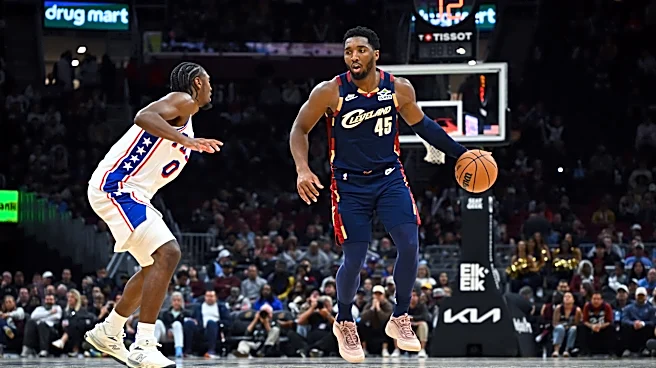
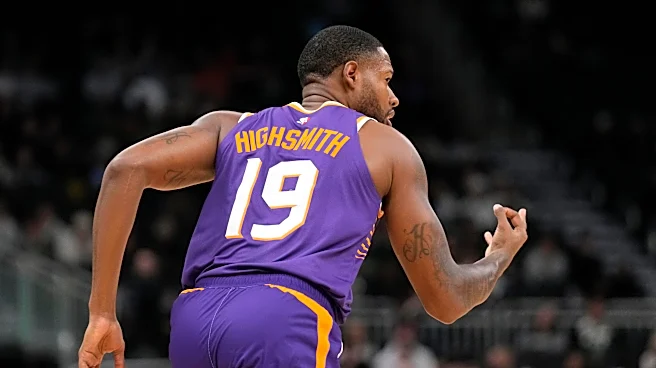
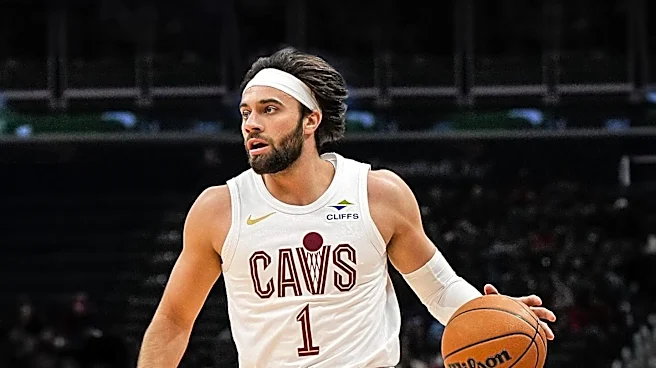
The Cleveland Cavaliers are actively seeking to trade Max Strus to create financial flexibility, according to NBA insider Marc Stein. This move follows their recent trade of Dennis Schröder to the Charlotte Hornets, which saved the Cavaliers $6.8 million
and positioned them approximately $30 million below the first apron and $42 million below the second. The primary motivation for offloading Strus, who has an expiring $16.7 million salary, is to generate more cap space. This additional flexibility is intended to aid their pursuit of restricted free agents Peyton Watson or Jonathan Kuminga, and to facilitate the eventual re-signing of James Harden. The Cavaliers do not currently possess the conventional cap space to sign Watson outright, making a sign-and-trade with the Denver Nuggets or further salary-clearing maneuvers their most realistic options.
Why It's Important?
This strategic financial maneuvering by the Cavaliers highlights the increasing importance of salary cap management and luxury tax implications in the NBA. By creating cap space, Cleveland aims to acquire young, high-potential talent like Watson or Kuminga, which could significantly impact their competitive standing in the Eastern Conference. For the Denver Nuggets, this development poses a credible threat to their efforts to retain Watson, as Cleveland's interest provides Watson's camp with increased leverage in contract negotiations. The Nuggets, already facing a projected luxury-tax bill of approximately $68 million after entering the second apron, must now decide whether to meet Watson's demands, which are reportedly higher than their initial offers, or risk losing a valuable homegrown player. The situation also underscores the challenges teams face in retaining talent under the league's complex financial rules, particularly for teams already in the luxury tax.
What's Next?
The Cleveland Cavaliers will continue their active search for a trade partner for Max Strus. Finding a team with sufficient traded player exceptions (TPE) and cap space to absorb Strus's $16.7 million salary will be crucial. Potential trade partners mentioned include the Hornets, Clippers, Grizzlies, and Bucks, though each presents its own complications and motivations. The outcome of these trade discussions will directly influence the Cavaliers' ability to pursue Peyton Watson or Jonathan Kuminga, likely through a sign-and-trade agreement. Meanwhile, the Denver Nuggets face a critical decision regarding Peyton Watson's contract. They can either increase their offer to match his demands, potentially incurring a higher luxury tax bill, or risk losing him, possibly for no return if he accepts his qualifying offer and becomes an unrestricted free agent next summer. The situation could also lead to a sign-and-trade scenario where the Nuggets receive assets in return for Watson.
Beyond the Headlines
This situation reflects a broader trend in the NBA where teams are increasingly aggressive in leveraging financial rules to gain a competitive edge. The pursuit of young, high-upside players like Watson and Kuminga, even through complex sign-and-trade scenarios, demonstrates a long-term strategic vision focused on sustainable success. The financial implications, particularly the luxury tax and salary apron rules, are not merely accounting details but fundamental drivers of team roster construction and player movement. The increased leverage for restricted free agents like Watson, due to external interest from financially flexible teams, could set a precedent for future contract negotiations across the league. This dynamic also highlights the constant tension between a team's desire to retain talent and the financial constraints imposed by the collective bargaining agreement, forcing difficult choices that can shape a franchise's trajectory for years.