


What's Happening?
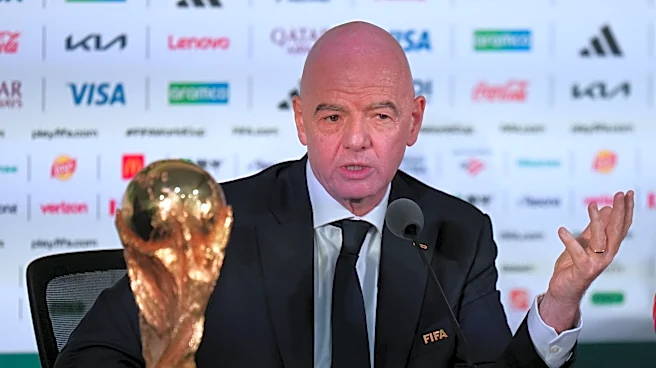
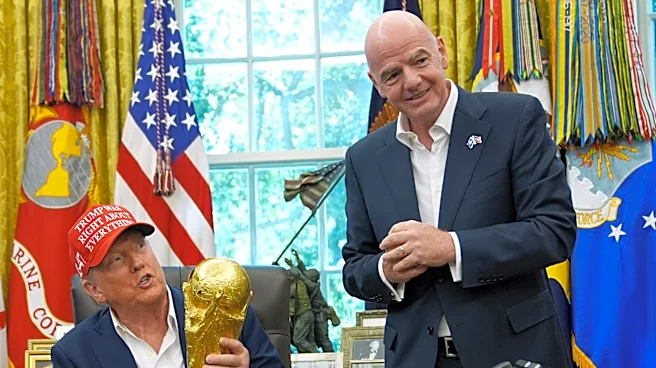
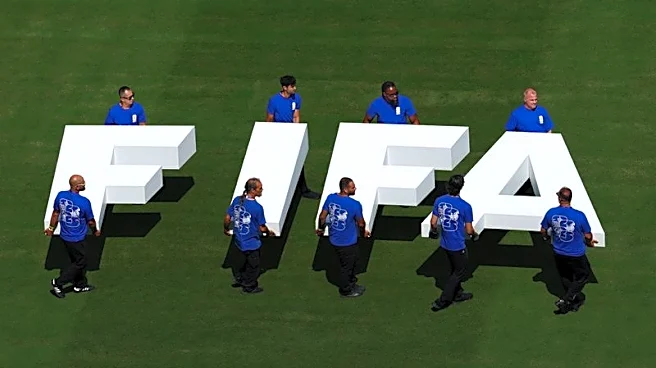
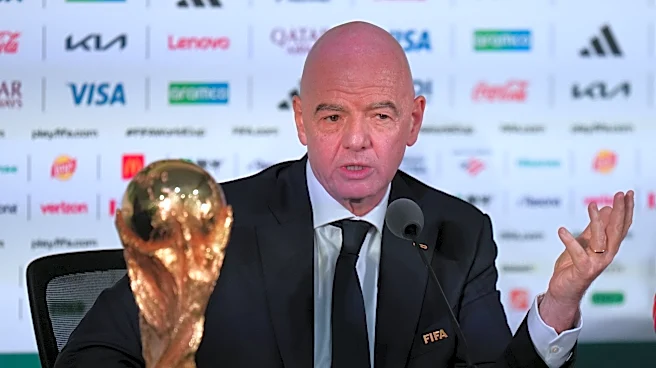
FIFA President Gianni Infantino is under increasing pressure following the resignation of his senior adviser, Carlos Cordeiro, over a controversial plan to sell World Cup profits to private equity. The plan, which involves creating a $20 billion commercial
subsidiary backed by Joshua Kushner, has faced opposition from major soccer bodies including UEFA and CONCACAF. These organizations have criticized the lack of transparency and consultation in the decision-making process. The Asian Football Confederation has also joined the opposition, calling for a review of FIFA's governance. Infantino's proposal has been described as a 'bad deal for football' by Cordeiro, who was not involved in the plan's development.
Why It's Important?
The proposed sale of World Cup stakes to private investors has significant implications for the governance and financial structure of international soccer. Critics argue that it could undermine the integrity of the sport by prioritizing financial gains over the interests of players, teams, and fans. The backlash from major soccer bodies highlights concerns about transparency and the potential loss of control over one of the sport's most prestigious events. The plan's rejection by UEFA and CONCACAF, which represent key markets and competitive regions, poses a substantial threat to its implementation and could lead to a reevaluation of FIFA's governance practices.
What's Next?
FIFA is likely to face continued scrutiny and pressure to abandon or revise the private equity plan. The opposition from major soccer bodies suggests that any attempt to proceed without broad consensus could lead to significant disruptions, including potential boycotts of FIFA events. Infantino may need to engage in more transparent consultations with member associations to address their concerns and seek a viable path forward. The situation could also prompt broader discussions about the governance and financial management of international soccer.