






What's Happening?
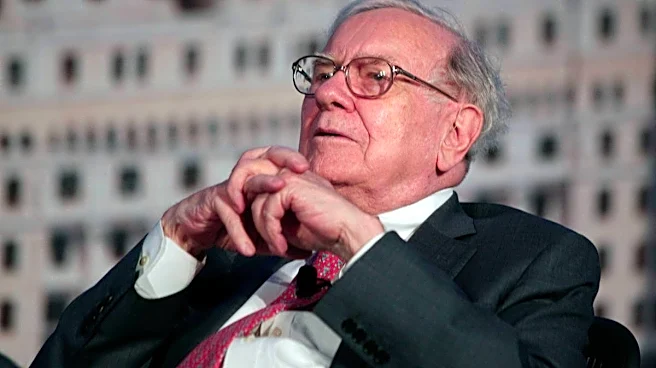
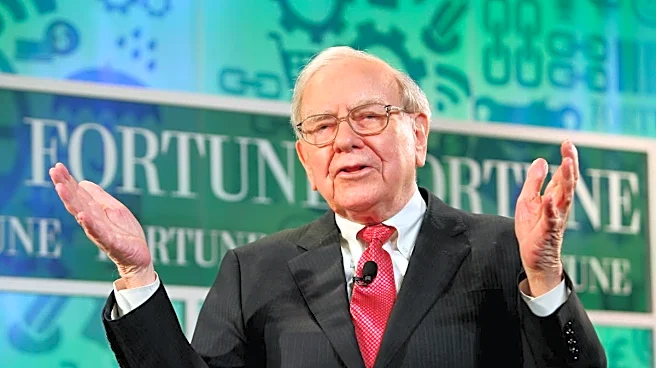
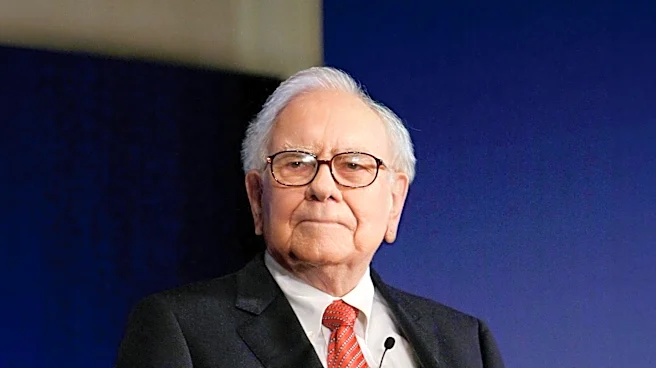
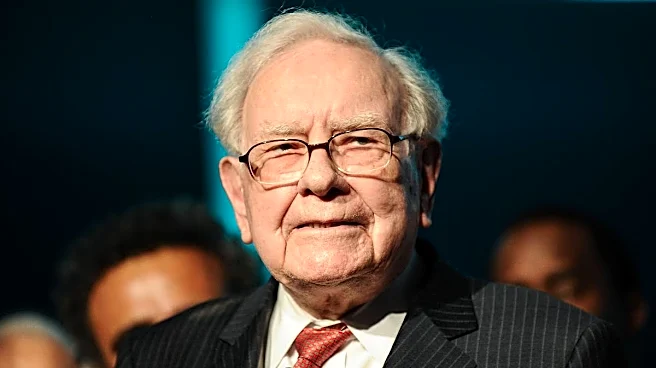
Warren Buffett, a renowned investor, consistently advises that most individuals, particularly beginners, are better served by investing in low-cost index funds rather than attempting to pick individual stocks. This philosophy is rooted in his belief that even
experienced investors struggle to consistently outperform the market. In his 2013 letter to Berkshire Hathaway shareholders, Buffett revealed his instructions for his own estate, stipulating that 90% of his money should be invested in a low-cost S&P 500 index fund, with the remaining 10% in short-term government bonds. He has reiterated this advice in subsequent letters, emphasizing the difficulty of reliably winning in the stock-picking game.
Why It's Important?
Buffett's endorsement of low-cost index funds carries significant weight in the U.S. financial landscape, particularly for retail investors. His advice democratizes investing, making it accessible and less intimidating for those without extensive financial knowledge or resources. By advocating for passive investment strategies, Buffett challenges the notion that complex stock analysis is necessary for wealth accumulation, potentially shifting investment behaviors towards more stable and diversified portfolios. This approach can lead to better long-term financial outcomes for average Americans by minimizing fees, reducing risk associated with individual stock volatility, and providing broad market exposure, thereby fostering greater financial security and participation in economic growth.
What's Next?
Given Warren Buffett's enduring influence, his continued advocacy for low-cost index funds is likely to reinforce their popularity among new and seasoned investors alike. Financial advisors and educational platforms may increasingly highlight these funds as a foundational component of investment strategies. This trend could further drive capital into broad market index funds, potentially impacting the growth and stability of the overall stock market. Additionally, the emphasis on low fees could pressure asset management firms to offer more competitive pricing on their index fund products. As financial literacy initiatives expand, Buffett's simple yet powerful advice is expected to remain a cornerstone of beginner investment guidance.
Beyond the Headlines
Buffett's philosophy extends beyond mere investment strategy; it reflects a deeper critique of the active fund management industry and the often-unrealistic expectations placed on individual investors. By suggesting that even he and his team cannot reliably beat the market, he implicitly questions the value proposition of high-fee, actively managed funds for the average person. This perspective has ethical implications, encouraging financial transparency and discouraging practices that might exploit investor inexperience. Culturally, it promotes a more patient, long-term approach to wealth building, contrasting with the speculative, short-term trading often glorified in popular media. It underscores the power of compounding and the importance of avoiding unnecessary risks and costs in financial planning.