







What's Happening?
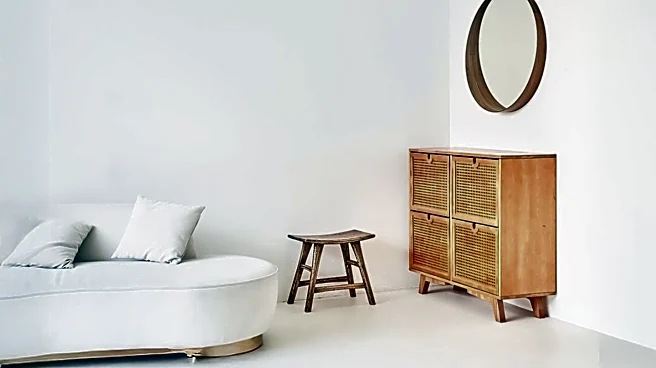
Openhouse Magazine features 'Groundpiece,' a sofa designed by architect and designer Antonio Citterio for Flexform, as a significant development in contemporary living. The article notes that 'Groundpiece' is more than just a seating system; it introduced
a new way of inhabiting domestic space by advocating for greater simplicity. Citterio's inspiration for the sofa draws from the sculptural language of Donald Judd, particularly the asymmetrical compositions found in Minimalist sculpture. This design approach has allowed 'Groundpiece' to transcend typical interior design, becoming a classic in contemporary design that emphasizes a less cluttered and more intentional use of living areas. The piece reflects a broader trend towards minimalism in home environments, responding to a societal call for reduced complexity in daily life.
Why It's Important?
The 'Groundpiece' sofa's influence underscores a significant shift in how domestic spaces are perceived and utilized. Its emphasis on simplicity and functionality reflects a growing desire among consumers for environments that offer calm and reduce visual clutter, directly impacting the furniture and interior design industries. This trend suggests a move away from ornate or overly decorative styles towards more streamlined, purposeful pieces. For manufacturers, it highlights the value of designs that offer both aesthetic appeal and practical utility, potentially driving innovation in modular and multi-functional furniture. For consumers, it promotes a lifestyle that prioritizes mindfulness and intentionality in their living spaces, contributing to mental well-being by creating more organized and serene home environments. The enduring classic status of 'Groundpiece' also demonstrates the long-term market viability of minimalist design principles.
What's Next?
The continued recognition of designs like 'Groundpiece' suggests that the trend towards simplicity and minimalism in domestic spaces will likely persist and evolve. Future developments in interior design may see an increased focus on adaptable furniture systems, integrated storage solutions, and multi-functional pieces that maximize space efficiency while maintaining a clean aesthetic. Designers may further explore the intersection of art and functionality, drawing inspiration from minimalist art forms to create practical yet visually striking home elements. Consumers can expect a wider array of products that support a decluttered lifestyle, with an emphasis on quality, durability, and timeless design. This could also lead to a greater demand for professional organizers and interior designers specializing in minimalist principles, as people seek to transform their homes into more serene and efficient sanctuaries.
Beyond the Headlines
Beyond its immediate impact on design, the popularity of 'Groundpiece' and the broader minimalist movement in domestic spaces reflect deeper societal shifts. In an increasingly fast-paced and information-saturated world, there is a growing psychological need for environments that offer respite and reduce cognitive load. The embrace of simplicity in home design can be seen as a counter-movement to consumerism, encouraging individuals to be more deliberate about their possessions and to value experiences over material accumulation. This has ethical implications regarding sustainable consumption and reducing waste. Culturally, it signifies a re-evaluation of what constitutes comfort and luxury, moving from ostentation to understated elegance and functional harmony. This trend could also influence urban planning and architectural design, promoting smaller, more efficient living units and a greater emphasis on shared, minimalist public spaces.