






What's Happening?
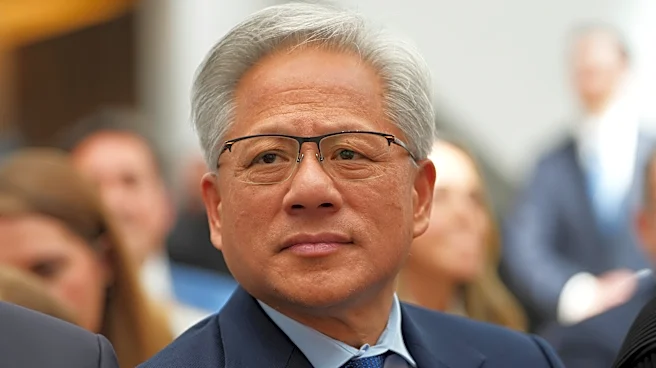
Jensen Huang, co-founder and CEO of Nvidia since 1993, has resigned from his position. This resignation follows reports that American intelligence agencies discovered his close relationship with a Chinese citizen and chip buyer, who U.S. officials concluded
was gathering intelligence for Beijing. President Trump was reportedly informed of this relationship but took no action, defending Huang as an 'honorable man' unaware of the individual's alleged role as a Chinese agent. Huang's departure marks a significant shift for Nvidia, a company he has dominated, with his family members also holding positions. His 3.56 percent stake makes him Nvidia's largest individual shareholder, and his leadership has been central to the company's success in the AI boom.
Why It's Important?
Jensen Huang's resignation from Nvidia carries substantial implications for the technology sector and U.S. national security. Nvidia, under Huang's leadership, has been a pivotal force in the artificial intelligence boom, driving U.S. stock markets to new highs. His departure creates uncertainty regarding the company's future direction and leadership, as he was deeply integrated into all aspects of its business and there is no clear successor. The allegations of a relationship with a suspected Chinese intelligence asset raise critical questions about corporate espionage, intellectual property protection, and the vulnerabilities of U.S. tech companies to foreign influence. This event could prompt increased scrutiny on the ties between U.S. tech executives and foreign entities, potentially leading to stricter regulations and compliance measures within the industry.
What's Next?
Nvidia faces immediate challenges in identifying and appointing a successor to Jensen Huang, a process that will be closely watched by investors and the tech community. The company's stock performance and strategic direction in the highly competitive AI market will depend heavily on this transition. Broader implications include potential shifts in U.S. policy regarding technology transfers and collaborations with China, especially concerning sensitive AI and chip technologies. The incident may also trigger investigations into other U.S. tech companies to assess their exposure to similar intelligence risks. Stakeholders, including government agencies, investors, and industry competitors, will be monitoring Nvidia's response and any subsequent actions taken by U.S. authorities to mitigate national security concerns in the tech sector.
Beyond the Headlines
The resignation of Jensen Huang from Nvidia extends beyond a typical corporate leadership change, highlighting the intricate and often fraught relationship between global commerce, technological innovation, and national security. The alleged involvement of a Chinese intelligence asset underscores the ongoing geopolitical competition for technological supremacy, particularly in critical areas like artificial intelligence and semiconductor manufacturing. This event could catalyze a re-evaluation of corporate governance practices, emphasizing the need for enhanced due diligence and risk management concerning international partnerships and personnel. It also brings to the forefront ethical considerations for executives operating in a globalized world, where personal relationships can inadvertently become national security liabilities. The incident may contribute to a broader trend of decoupling between U.S. and Chinese tech ecosystems, driven by concerns over data security and intellectual property.