






What's Happening?
Experts in early childhood education, including Tovah Klein, Director of the Barnard College Center for Toddler Development, and Marie Conti, a board member of the American Montessori Society, have provided recommendations for the best gifts for 4-year-olds.
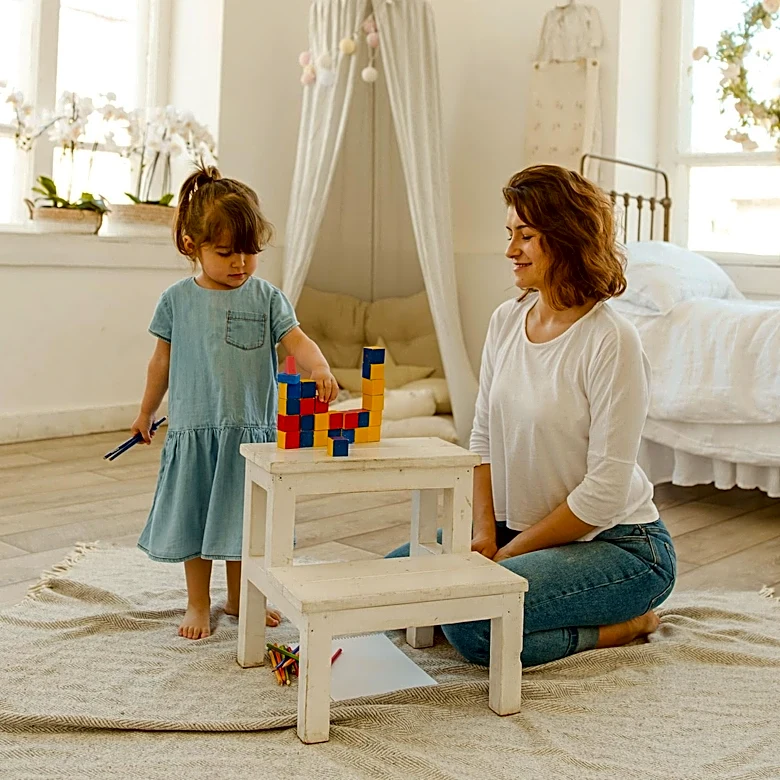
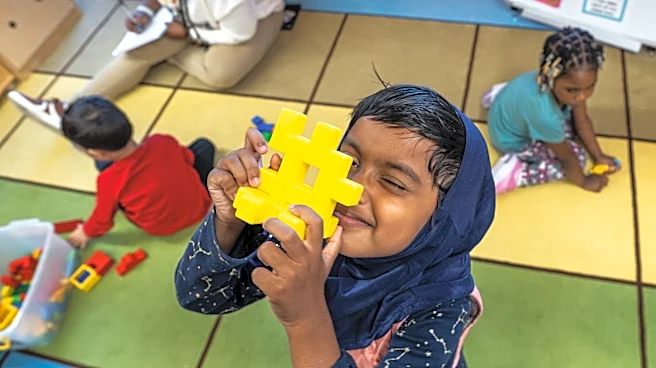
These gifts are designed to foster imagination, encourage narrative-driven pretend play, and support spatial exploration. The selections include items that promote STEM/STEAM learning, engineering, creative building, and problem-solving. Examples range from the Chompshop ChompSaw, a safe crafting tool for building forts and costumes, to the Bluey Splash Time Game, an interactive game that teaches sharing and cooperative play. Other recommended items include the Barbie Roll and Reveal Soccer Player Doll for imaginative unboxing and role-playing, and various educational toys like cash registers for counting and coding sets for screen-free learning.
Why It's Important?
The focus on developmental toys for 4-year-olds is crucial for their cognitive, social, and emotional growth, impacting their readiness for kindergarten and beyond. In the U.S., early childhood development is a significant area of focus for parents, educators, and policymakers, recognizing its long-term effects on academic success and overall well-being. Gifts that encourage STEM learning, like the Chompshop ChompSaw or coding sets, are particularly important as they lay foundational skills for future careers in science, technology, engineering, and mathematics, areas vital for the U.S. economy and innovation. Furthermore, toys that promote interactive and pretend play help children develop social skills, empathy, and problem-solving abilities, which are essential for navigating complex social environments. The emphasis on screen-free options also addresses growing concerns among U.S. parents and educators about excessive screen time and its potential negative impacts on child development.
What's Next?
Parents and gift-givers are encouraged to consider these expert-backed recommendations when selecting presents for 4-year-olds. The continued development of toys that integrate educational principles with engaging play is expected. As children at this age begin to form clear preferences and engage more deeply with storytelling and collaborative play, the market will likely see further innovations in products that cater to these evolving needs. The advice from experts like Tovah Klein and Marie Conti will continue to guide product development and consumer choices, ensuring that gifts contribute positively to a child's developmental milestones. The trend towards toys that encourage outdoor exploration, creativity, and critical thinking without relying on screens is likely to persist and grow.
Beyond the Headlines
Beyond the immediate benefits of play, the selection of developmental toys for 4-year-olds reflects broader societal values and educational priorities in the U.S. The push for STEM education from an early age is a direct response to the demands of a rapidly evolving technological landscape. Moreover, the emphasis on imaginative and narrative play underscores the importance of fostering creativity and critical thinking, skills that are increasingly valued in a complex world. The experts' advice to choose toys that encourage sharing and interactive play also highlights the foundational role of early social development in building cooperative and empathetic citizens. This curated approach to gift-giving moves beyond mere entertainment, positioning toys as essential tools for holistic child development and preparing the next generation for future challenges and opportunities.