




What's Happening?
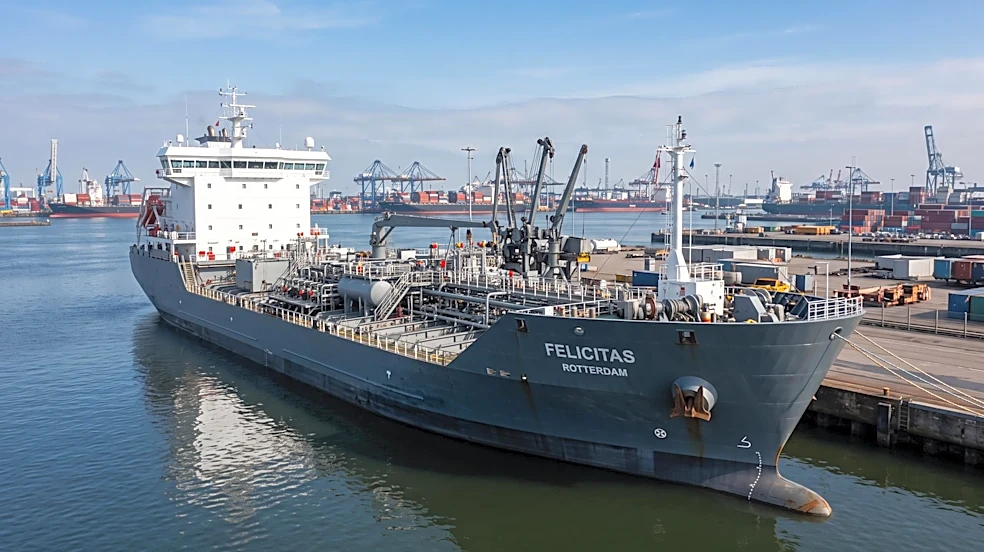
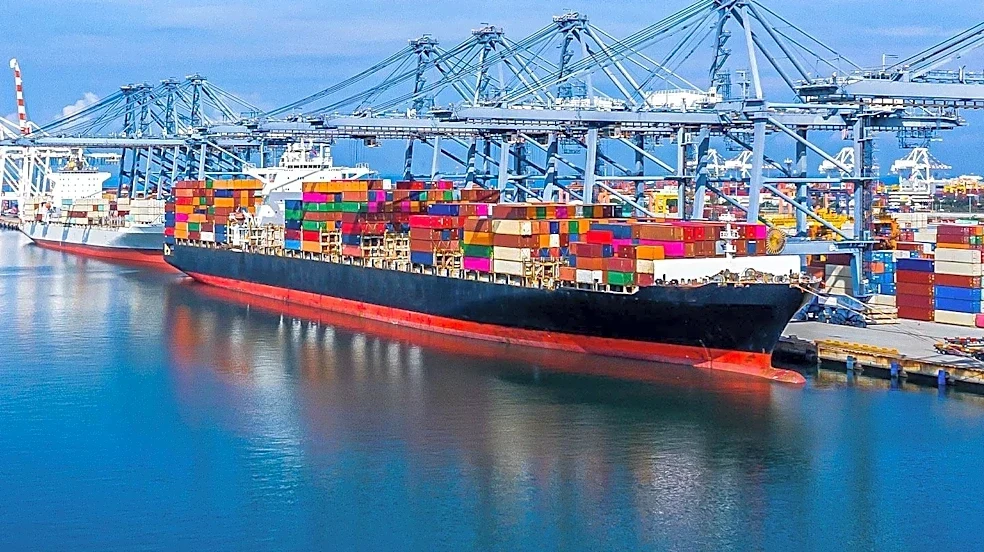
Dutch inland shipping company AMS Barging has christened its new diesel-electric tanker, Felicitas, in Rotterdam. The 135-meter vessel, designed by RensenDriessen Shipbuilding and fitted out by Den Breejen Shipyard, has a cargo capacity of approximately
9,000 cubic meters. Felicitas is equipped with 12 cargo tanks, a dual piping system, two mass flow meters, a nitrogen generator, a bunker boom, and a cargo pumping capacity of 1,800 cubic meters per hour. A key feature of the tanker is its design for future modifications to accommodate methanol bunkering, reflecting AMS Barging's strategy to adapt to evolving fuel demands. This addition brings AMS Barging's fleet to 17 vessels, following the christening of its sister vessel, Fortuna, earlier this year. Felicitas has already completed its maiden commercial voyage and is operating on the spot market.
Why It's Important?
The christening of the methanol-ready tanker Felicitas by AMS Barging is important as it highlights a proactive approach within the maritime industry to address future fuel transition and environmental regulations. While AMS Barging is a Dutch company, its strategic move towards methanol-ready vessels has implications for global shipping and U.S. ports, which will need to adapt their infrastructure to handle alternative fuels. This development signals a growing trend in the shipping sector to invest in vessels that can transport conventional fuels while being prepared for a shift to greener alternatives, such as methanol. This flexibility is crucial for maintaining efficiency and competitiveness in a market increasingly influenced by geopolitical developments and the energy transition. U.S. businesses involved in maritime logistics, port operations, and fuel supply chains will need to monitor and potentially adapt to these evolving industry standards to remain relevant and compliant.
What's Next?
AMS Barging's strategy indicates a continued focus on developing newbuild vessels that incorporate the latest technologies and are tailored to market needs, particularly regarding fuel flexibility. The company anticipates strong demand for large tankers capable of efficient cargo transport, and Felicitas is designed to meet this need by reducing the number of vessel movements and optimizing loading/unloading facilities. Future developments will likely involve further integration of alternative fuel capabilities across their fleet, potentially including full methanol operation as bunkering infrastructure matures. The success of Felicitas and its sister vessel, Fortuna, will inform future investment decisions in similar advanced vessels. The broader maritime industry, including U.S. stakeholders, will observe these operational shifts as they consider their own transitions towards more sustainable and adaptable shipping solutions.
Beyond the Headlines
The introduction of methanol-ready vessels like Felicitas points to a deeper, less obvious implication: the gradual but inevitable transformation of global maritime fuel standards. This move by AMS Barging, while localized, contributes to a broader industry-wide shift away from traditional fossil fuels, driven by environmental concerns and regulatory pressures. The ethical dimension lies in the shipping industry's responsibility to reduce its carbon footprint, and methanol, as a cleaner-burning fuel, offers a viable pathway. Legally, this trend could accelerate the development of international and national regulations concerning alternative marine fuels, impacting U.S. maritime law and port policies. Culturally, it signifies a growing acceptance and integration of sustainable practices within a historically conservative industry. The long-term shift could see a complete overhaul of port infrastructure, bunkering operations, and vessel design worldwide, with significant economic and environmental consequences for all nations involved in global trade.