






What's Happening?
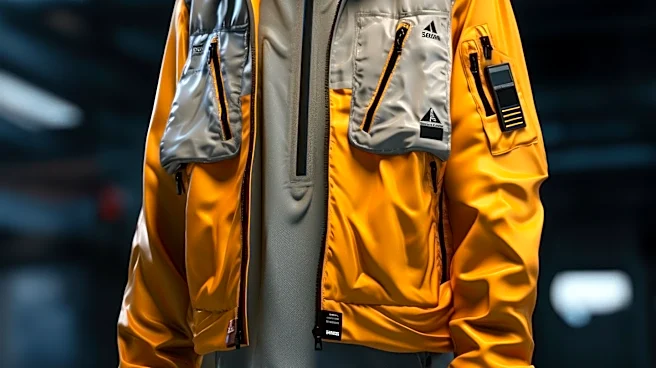
Arc'teryx, a Canadian outdoor apparel specialist, has launched 'System 0,' a new framework for circular design that will be applied across its entire product range. The first product to emerge from this framework is the Sperro SV hardshell jacket. System 0 encompasses
the full product lifecycle, from design and production to repair and end-of-life, aiming for materials that can be recycled while maintaining performance standards. The Sperro SV jacket is constructed using Gore-Tex Pro Fabric with an ePE membrane and nylon face fabric and backer designed for recyclability in collaboration with Aquafil, the maker of Econyl regenerated nylon. This initiative reflects Arc'teryx's commitment to building and scaling its business with circularity as a core principle, extending its existing ReBIRD system for washing, repairing, trading in, reselling, and upcycling products.
Why It's Important?
This move by Arc'teryx is significant for the U.S. apparel industry and the broader sustainability movement. It demonstrates a tangible commitment to circular economy principles within the high-performance outdoor gear market, an area traditionally challenged by complex material compositions. By designing products for longevity, repairability, and eventual recyclability, Arc'teryx is setting a new standard that could influence other brands to adopt similar practices. This shift can reduce textile waste, decrease reliance on virgin resources, and lower the environmental footprint of manufacturing. For U.S. consumers, it offers more sustainable product choices and extends the lifespan of their gear, potentially reducing overall consumption. The collaboration with material innovators like Gore-Tex and Aquafil also highlights the importance of supply chain partnerships in achieving circularity goals, pushing for innovation in material science and recycling technologies.
What's Next?
Arc'teryx plans to apply the System 0 design framework across its full product range in the coming years. The Sperro SV jacket, which includes three years of unlimited out-of-warranty repairs through the ReBIRD system, will be disassembled at its end-of-life, with its nylon components regenerated into virgin-grade Econyl yarn by Aquafil. This process will serve as a model for future circular products. The company also helped shape the Testex Circularity standard, under which the Sperro SV is the first certified product, indicating a potential for broader industry adoption of such certification. Future developments will likely involve expanding the range of recyclable materials, refining disassembly and recycling processes, and further integrating repair and resale services to maximize product lifespan and minimize waste.
Beyond the Headlines
The introduction of System 0 by Arc'teryx represents a deeper philosophical shift in product design, moving from a linear 'take-make-dispose' model to a regenerative one. This initiative challenges the notion that high-performance and sustainability are mutually exclusive, proving that advanced technical apparel can also be environmentally responsible. Ethically, it addresses consumer demand for more sustainable products and corporate accountability for environmental impact. Culturally, it reinforces the value of durability, repair, and resourcefulness, counteracting the fast-fashion trend. The focus on designing for disassembly and material regeneration could spur innovation in recycling infrastructure and material science, creating new economic opportunities and skilled jobs in the U.S. and globally. This long-term vision aims to create a closed-loop system where materials retain their value and utility indefinitely.