








What's Happening?
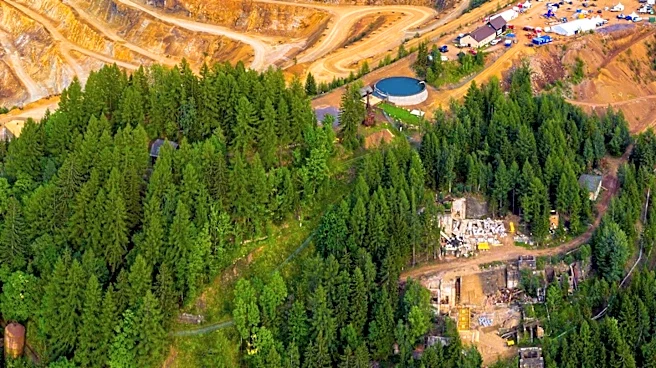
American West Metals has announced significant progress in its West Desert Project located in Utah, USA. The company has reported that recent drilling has expanded the mineral system, confirming the presence of zinc, lead, and molybdenum mineralisation
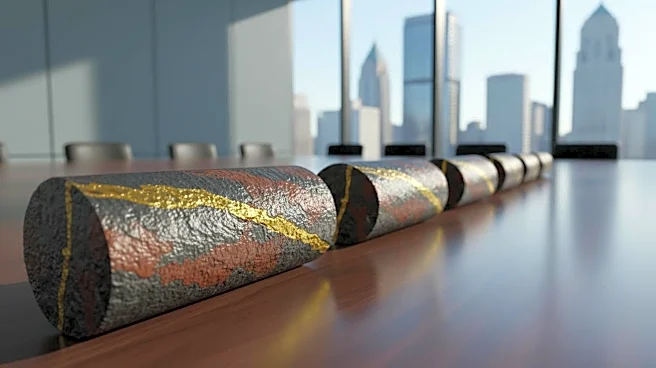
over a stretch of 1.6 kilometers. The assays from drill hole WD26-02 have revealed high concentrations of zinc, lead, gallium, and gold, with zinc values reaching up to 8.60%. These findings are associated with the Juab Fault and carbonate replacement deposits, located 350 meters southeast of the main West Desert Deposit. The company is optimistic about the potential for further mineralisation, particularly of the Apex Mine-style gallium-germanium type, and plans additional drilling to explore the near-surface weathered zone. Visual results from another drill hole, WD26-03, indicate substantial intervals of zinc, lead, and molybdenite mineralisation, further supporting the project's potential.
Why It's Important?
The expansion of mineralisation at the West Desert Project is significant for American West Metals as it enhances the project's viability and potential profitability. The presence of high-grade zinc, lead, and other valuable minerals could attract further investment and development opportunities. This development is crucial for the U.S. mining industry, particularly in the context of increasing demand for critical minerals used in various industries, including technology and renewable energy. The project's success could also contribute to local economic growth, providing jobs and boosting the regional economy in Utah. Additionally, the discovery of gallium and germanium, which are critical for electronics and other high-tech applications, aligns with national interests in securing domestic sources of these strategic materials.
What's Next?
American West Metals plans to continue its exploration efforts at the West Desert Project, with further drilling scheduled to test the near-surface weathered zone for additional mineralisation. The company is also preparing metallurgical samples from historical waste dumps for laboratory testing, which could provide further insights into the project's potential. The results of these tests, expected within three to five weeks, will be crucial in determining the next steps for the project. Stakeholders, including investors and local communities, will be closely monitoring these developments, as they could influence future investment decisions and regional economic planning.