


What's Happening?
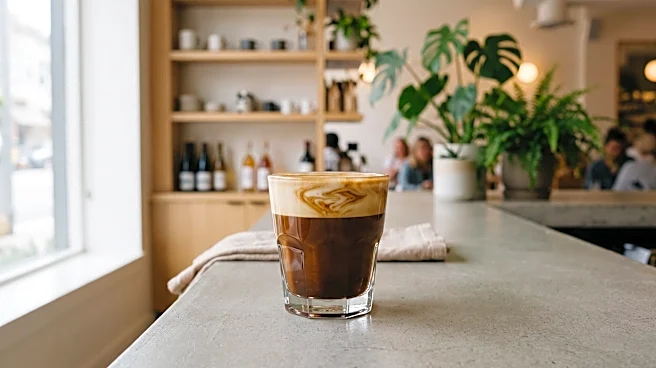
The Gibraltar coffee drink, a short espresso-and-milk beverage, is widely reported to have originated in San Francisco cafes around the mid-2000s, with Blue Bottle Coffee frequently cited in its history. The drink is named after the small Libbey 'Gibraltar'
glass, typically around 4.5 ounces, in which it is often served. Blue Bottle founder James Freeman reportedly described it as a cortado, a similar espresso-and-milk drink, that they did not initially identify by that name. Kaldi’s Coffee also dates the drink's emergence to approximately 2005 in San Francisco. While there is no single official recipe, common descriptions involve a double espresso with about two ounces of lightly steamed milk, served in a small, heat-safe glass to maintain its espresso-forward character. The milk should be lightly textured, creating a pourable microfoam rather than a thick cappuccino-style foam.
Why It's Important?
The emergence and popularization of drinks like the Gibraltar highlight the innovative and evolving nature of the U.S. specialty coffee industry. This trend reflects a consumer demand for nuanced coffee experiences beyond traditional lattes and cappuccinos. For coffee retailers and roasters, understanding and adapting to these preferences can be crucial for market differentiation and customer engagement. The association of a specific glass with a drink, as seen with the Gibraltar, also demonstrates how presentation and branding can influence a product's identity and appeal. This phenomenon can inspire other food and beverage businesses to consider unique serving methods or product names to create distinct offerings in a competitive market. The story also underscores the role of individual cafes and founders, like James Freeman of Blue Bottle Coffee, in shaping coffee culture and introducing new trends that can gain widespread recognition.
What's Next?
The continued evolution of specialty coffee drinks suggests that cafes and roasters will likely explore further innovations in beverage creation, presentation, and naming. Consumers can anticipate new variations of espresso-based drinks, potentially incorporating different milk alternatives, flavor profiles, or serving vessels. For home baristas, the detailed descriptions of drinks like the Gibraltar provide a foundation for experimentation, encouraging them to replicate and adapt cafe-style beverages. The ongoing discussion and slight variations in recipes among different coffee guides indicate that the industry will continue to refine and define these drinks, potentially leading to more standardized practices or new interpretations. This dynamic environment fosters continuous creativity and competition within the U.S. coffee market.
Beyond the Headlines
The story of the Gibraltar coffee drink extends beyond its recipe, touching upon the cultural significance of coffee in urban centers like San Francisco. It illustrates how local cafe scenes can become incubators for new culinary trends that eventually spread nationally. The naming convention, linking the drink to a specific glass, highlights the interplay between utility and aesthetics in food and beverage service, where the vessel becomes an integral part of the product's identity. This also reflects a broader consumer appreciation for craftsmanship and attention to detail in their daily consumables. Furthermore, the informal evolution of the drink, without a single 'official' recipe, speaks to the organic nature of culinary innovation, often driven by practical considerations and local interpretations rather than top-down standardization. This organic growth can lead to a rich diversity of offerings and regional variations within the U.S. coffee landscape.