






What's Happening?
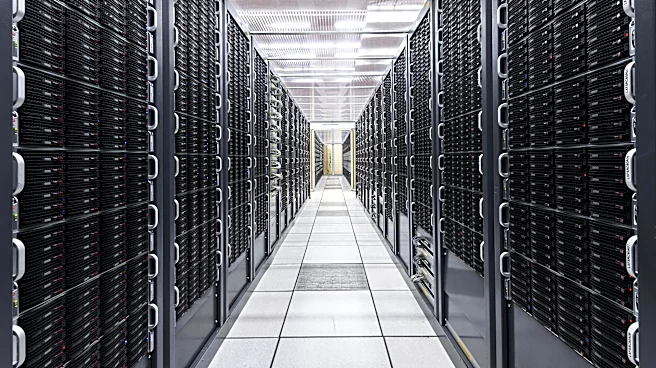
The U.S. data center sector has demonstrated significant growth, outperforming the broader commercial real estate market with an annualized return of 7.1% over the past three years, according to NCREIF. This figure is more than triple the 2.1% return seen
across all commercial properties. This expansion is largely driven by the increasing demand for cloud computing and artificial intelligence (AI). While returns moderated to 0.4% in Q3 2026 and 2.4% over the last 12 months, due to an elevated construction pipeline and higher costs for building, upgrading, and powering facilities, institutional interest remains strong. Data centers now account for nearly 10% of U.S. commercial real estate transaction volume, a significant increase from less than 2% historically, as reported by MSCI. Capital spending by major hyperscalers is projected to reach $1.17 trillion in 2027, nearly tripling from $412 billion in 2025, reflecting accelerated investment in AI infrastructure.
Why It's Important?
The robust performance of the U.S. data center real estate market highlights a significant shift in commercial property investment and development, driven by technological advancements. The substantial capital expenditure by hyperscalers underscores the critical role of AI infrastructure in the national economy. This trend indicates a growing reliance on digital services and AI, which will likely reshape urban planning and regional economic development. The shift of data center development to secondary markets in the Midwest, Southeast, and Mountain West, away from established hubs, suggests new opportunities for economic growth in these regions. This decentralization is influenced by power constraints, high costs, and local permitting challenges in traditional locations, making less latency-sensitive AI training more feasible in these emerging areas. The increasing costs associated with developing and maintaining these facilities also point to potential challenges for investors, requiring careful financial planning and strategic investment.
What's Next?
The continued expansion of the data center sector is expected to drive further investment in AI infrastructure, with hyperscalers projected to significantly increase their capital spending. This will likely lead to sustained demand for data center properties, particularly in secondary markets that offer more favorable conditions for development. Investors will need to navigate rising development, equipment, and property improvement costs, which nearly doubled to $161 per square foot in 2025. The industry will also need to address power constraints and local permitting hurdles, which are influencing the geographical distribution of new data center projects. The ongoing institutional interest suggests that data centers will remain a key component of commercial real estate portfolios, potentially attracting more diverse investors seeking stable returns in a technology-driven market.
Beyond the Headlines
The rapid growth of the data center industry carries broader implications beyond real estate and finance. The substantial energy consumption of these facilities raises environmental concerns, particularly regarding carbon footprints and the strain on local power grids. As AI training becomes less latency-sensitive, the geographical shift to secondary markets could lead to new infrastructure demands and economic revitalization in previously underserved areas. This decentralization might also create new job opportunities and alter local economies. Furthermore, the increasing reliance on data centers for critical services and AI applications underscores national security considerations, including cybersecurity and the resilience of digital infrastructure. The high costs of maintaining and upgrading these facilities could also lead to consolidation within the industry, favoring larger players with greater capital resources.