








What's Happening?
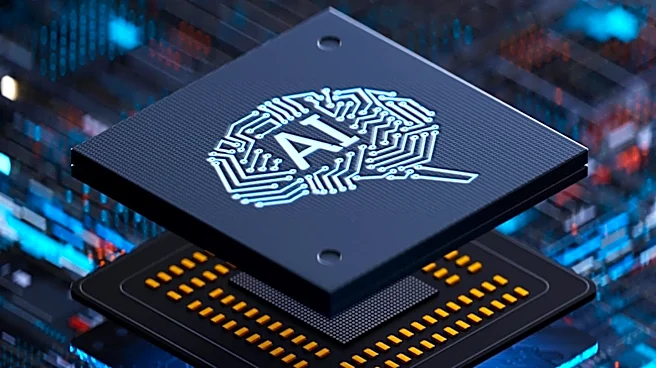
U.S.-based AMD and Saudi Arabia's HUMAIN have partnered to broaden access to Artificial Intelligence (AI) technologies for companies and institutions in the Kingdom. This collaboration introduces a technical solution called 'AI in a Box,' designed to transform
advanced computing and AI capabilities into practical applications for businesses. The initiative aims to help enterprises transition from merely exploring AI to actively testing and integrating its applications into their daily operations. The 'AI in a Box' solution is a ready-to-deploy package that combines AMD's advanced computing power, specifically its AMD Instinct graphics processing units and AMD EPYC processors, with HUMAIN's expertise in developing integrated AI solutions. This approach allows companies to adopt AI gradually, starting with specific use cases, testing feasibility, and assessing practical results before scaling deployment. The partnership reflects Saudi Arabia's broader strategy to enhance its AI capabilities and shift focus from technical infrastructure investment to delivering tangible business value across its economic sectors.
Why It's Important?
This partnership is significant as it addresses a critical challenge in AI adoption: enabling businesses to implement AI without requiring substantial upfront investments in hyperscale infrastructure. By offering a phased approach, the 'AI in a Box' solution lowers the barrier to entry for many enterprises, particularly those in the early stages of their technology journey. The collaboration also highlights a growing trend in the technology sector to link AI investments directly to business outcomes, rather than just showcasing technical prowess. For U.S. companies like AMD, this partnership represents an expansion into international markets, leveraging their advanced computing technologies to meet global demand for AI solutions. The success of such initiatives can influence how AI solutions are packaged and delivered worldwide, emphasizing practical application and measurable impact over raw computing power. It also underscores the increasing importance of strategic international collaborations in driving technological advancement and economic diversification.
What's Next?
The collaboration between HUMAIN and AMD is set to continue expanding, with plans to deploy up to 250 megawatts of additional AI infrastructure starting in 2027, working towards a target of one gigawatt by 2030. This ongoing development indicates a long-term commitment to building comprehensive AI capabilities in Saudi Arabia, which could serve as a model for other regions. Companies adopting the 'AI in a Box' solution will likely focus on identifying high-value use cases, integrating AI with existing business systems, and establishing robust governance frameworks. The success of these early implementations will be crucial in demonstrating the commercial value of AI and encouraging broader adoption. Furthermore, the partnership's emphasis on practical application and measurable results will likely drive further innovation in AI solution delivery, pushing for more user-friendly and outcome-oriented AI products in the market.
Beyond the Headlines
The 'AI in a Box' initiative touches upon deeper implications regarding the democratization of advanced technology. By simplifying AI adoption, it could empower a wider range of businesses, including small and medium-sized enterprises, to leverage AI for competitive advantage. This could lead to a more equitable distribution of AI benefits across various industries and geographies. However, the success of these solutions will also depend on factors such as data quality, the availability of skilled talent to operate and manage AI systems, and adherence to information security, governance, and regulatory compliance. The ethical considerations of AI deployment, particularly concerning data privacy and algorithmic bias, will become increasingly prominent as adoption scales. This partnership also signifies a broader geopolitical trend where technological leadership and AI capabilities are becoming central to national economic strategies and international collaborations.