





What's Happening?
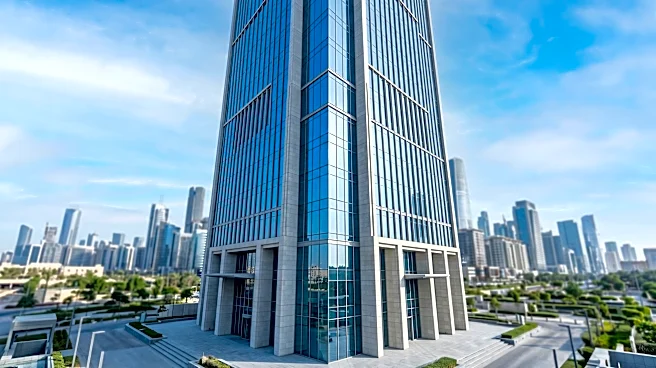
Barclays, a UK-headquartered bank, has officially opened an office in Riyadh's King Abdullah Financial District after securing an operational license from Saudi Arabia's Capital Market Authority. This license permits Barclays to conduct investment banking
and global markets business within the Kingdom. Concurrently, Barclays has appointed Majed Al Hassoun as the chief executive and head of investment banking for Barclays Capital Saudi, the local legal entity. Based in Riyadh, Al Hassoun will be responsible for serving corporate, government, and institutional clients, and will act as the bank's senior representative with regulators. He will report to Khaled El Dabag, chief executive of the regional headquarters and co-chief executive and head of investment banking, Middle East. Al Hassoun previously held leadership roles at State Street Saudi Arabia, Citigroup, and Saudi Fransi Capital.
Why It's Important?
Barclays' expansion into Riyadh signifies a growing trend among international financial institutions to establish a stronger presence in Saudi Arabia. This move is driven by the Kingdom's regional headquarters program, which incentivizes international firms seeking government business to set up local bases. The establishment of a dedicated office and the appointment of a Saudi CEO like Majed Al Hassoun demonstrate Barclays' commitment to the Saudi market and its strategic importance. This expansion will likely increase competition within Saudi Arabia's financial sector, potentially leading to enhanced services and investment opportunities for local businesses and government entities. For Barclays, it provides direct access to a rapidly developing market and aligns with its strategy to strengthen its investment and corporate banking ties with its private banking arm, particularly for clients with international operations.
What's Next?
Barclays' new Riyadh office is expected to become a key hub for its investment banking and global markets operations in Saudi Arabia. The bank will likely focus on leveraging Majed Al Hassoun's local expertise and network to secure new business from corporate, government, and institutional clients. This expansion could lead to further recruitment and development of local talent within the Saudi financial sector. Other international banks, including Goldman Sachs and Citi, have already expanded their Riyadh operations, suggesting a continued influx of foreign investment and financial services expertise into the Kingdom. This trend is anticipated to contribute to the diversification and growth of Saudi Arabia's economy, aligning with its broader Vision 2030 goals.
Beyond the Headlines
Barclays' move into Riyadh reflects a broader strategic shift by global financial institutions towards emerging markets in the Middle East, particularly Saudi Arabia, which is undergoing significant economic transformation. This expansion is not merely about market access but also about aligning with Saudi Arabia's ambitious economic reforms and development projects. The emphasis on local leadership, as seen with the appointment of Majed Al Hassoun, highlights the importance of cultural understanding and local expertise in navigating the regulatory and business landscape. While offering significant opportunities, operating in the region also presents challenges, including geopolitical complexities and the need to adhere to evolving regulatory frameworks. The success of Barclays and other international banks in Riyadh will be a key indicator of the Kingdom's ability to attract and retain foreign direct investment in its financial sector.