








What's Happening?
The integration of compact collaborative robots (cobots) with autonomous mobile robots (AMRs) is transforming warehouse operations. This development addresses the increasing need for automation in tasks such as pick-and-place, palletizing, and machine-tending.
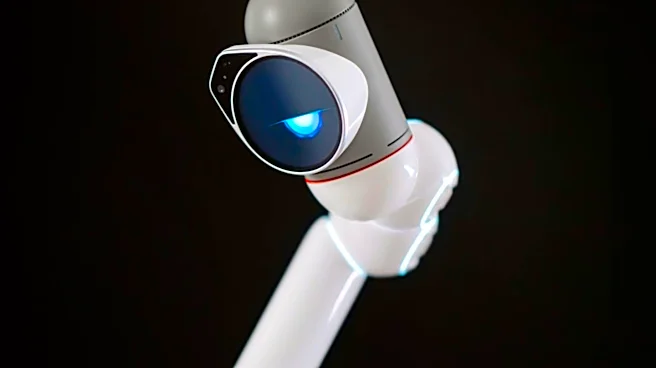
Cobots, particularly seven-axis models, are gaining traction due to their ability to be mounted on AMRs, offering enhanced flexibility and precision. This integration allows for more efficient workflows, reducing the need for multiple robot stations and minimizing manual touchpoints. The technology is designed to improve repetitive tasks like assembly and welding, while also addressing labor shortages in the industry. The cobots' ability to operate directly from AMR batteries further enhances their functionality and reduces their footprint in facilities.
Why It's Important?
The adoption of cobots integrated with AMRs is significant for the warehousing industry as it offers a cost-effective solution to labor shortages and productivity challenges. By automating repetitive tasks, these technologies free up human workers for more complex duties, potentially improving job satisfaction and reducing physical strain. This shift could lead to lower turnover rates and enhanced competitiveness in the industry. The integration of cobots and AMRs also represents a move towards more flexible and efficient material handling, which is crucial as warehouses continue to face pressure to optimize operations. The technology's ability to operate safely alongside human workers without extensive safety protocols further underscores its potential to revolutionize warehouse environments.
What's Next?
As the adoption of cobots and AMRs continues to grow, companies are likely to further invest in these technologies to enhance their operations. Decision-makers in the warehousing sector will need to evaluate the benefits of integrating seven-axis cobot-AMR systems while ensuring they support skilled workers. The ongoing development of these technologies may lead to more advanced features and capabilities, further improving efficiency and safety in warehouses. Additionally, as more companies recognize the benefits of automation, the industry could see increased competition and innovation, driving further advancements in robotics technology.