


What's Happening?
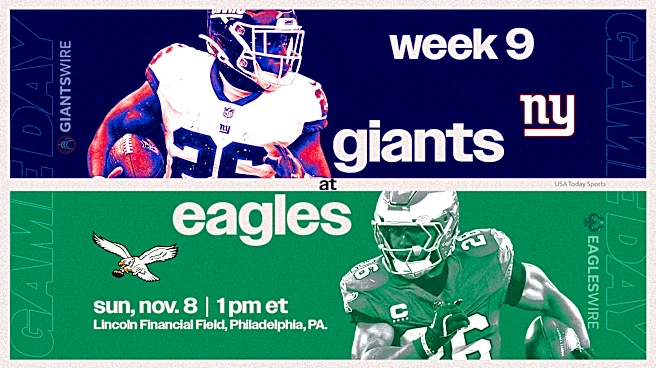
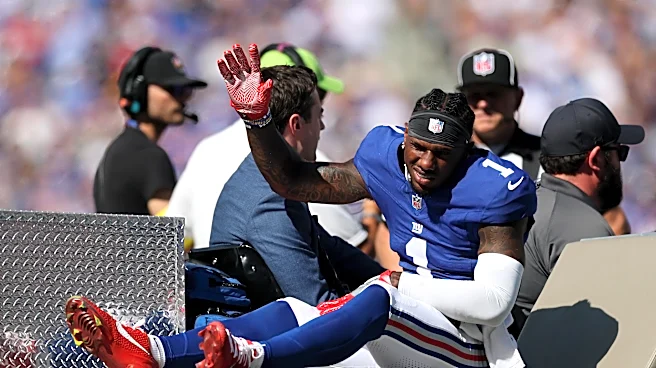
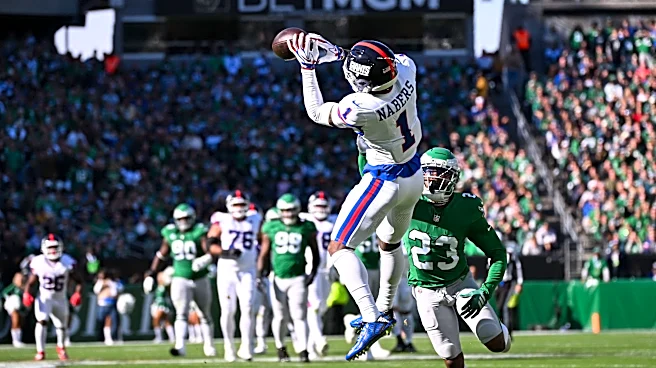
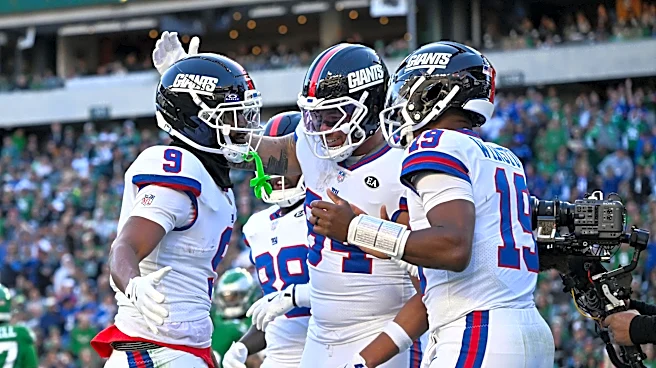
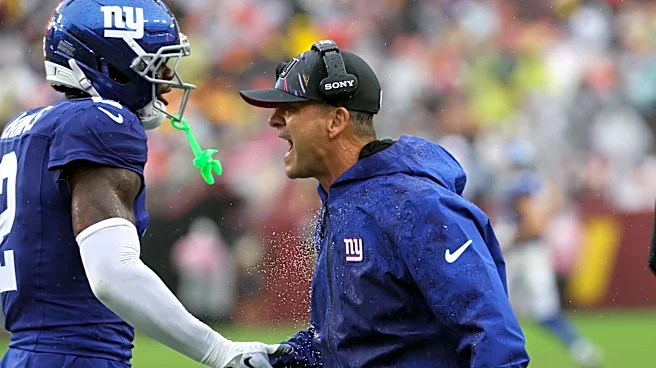
New York Giants wide receiver Malik Nabers has publicly criticized Fox analyst Greg Olsen for comments made during the team's 19-11 victory over the Philadelphia Eagles. During the broadcast, Olsen and fellow announcer Joe Davis highlighted Nabers' body
language on the sideline, with Olsen suggesting there's a 'fine line between being demanding and chasing greatness and then being a bad teammate.' Nabers, who finished the game with five catches for 43 yards and dropped a potential fourth-quarter touchdown, took to Instagram after the game to express his displeasure. He stated that Olsen's remarks about him being a 'bad teammate' were 'crazy' and accused the broadcast of trying to 'create a narrative' about him. Nabers asserted that no teammate he has ever played with has called him a bad teammate and requested that cameras be kept off him if his playing style is disliked. This incident occurred after a game where Nabers snapped a four-game streak of at least 111 receiving yards.
Why It's Important?
This incident highlights the growing tension between professional athletes and sports broadcasters regarding in-game commentary and player portrayal. For athletes like Nabers, public criticism from analysts can be perceived as an attack on their character and professionalism, potentially affecting their public image and team dynamics. For broadcasters, the role involves providing analysis, which often includes observations on player performance and demeanor. This clash underscores the subjective nature of interpreting player actions and the impact of media narratives on athletes' careers. It also brings to light the scrutiny athletes face, where every gesture and expression can be analyzed and debated, potentially leading to broader discussions about media ethics in sports reporting and the mental toll on players under constant public observation. The situation could influence how players interact with media and how broadcasters approach their commentary in the future.
What's Next?
The immediate aftermath may see continued discussion on sports talk shows and social media regarding Nabers' reaction and Olsen's commentary. While Nabers' Instagram post has reportedly been deleted, the sentiment remains public. It is possible that Olsen or Fox Sports may issue further statements or clarifications regarding the broadcast. For Nabers, the focus will likely shift to his on-field performance in upcoming games, particularly how he responds to the scrutiny and whether his sideline demeanor changes. The Giants are scheduled to host the Commanders next, which will be another opportunity for Nabers to demonstrate his focus and commitment. This event could also prompt internal discussions within broadcast networks about the language used when critiquing player behavior, especially concerning character assessments versus performance analysis.
Beyond the Headlines
Beyond the immediate exchange, this event touches upon broader themes of athlete agency and media influence in professional sports. Athletes are increasingly using their platforms, such as social media, to directly address criticisms and shape their own narratives, bypassing traditional media filters. This shift empowers athletes but also opens new avenues for public disputes with media figures. The incident also raises questions about the responsibility of broadcasters to differentiate between on-field performance critiques and character judgments. The 'bad teammate' label, even if implied, carries significant weight in team sports, potentially affecting a player's reputation within the league and with fans. This dynamic reflects a larger cultural trend where public figures are more willing to challenge media portrayals, leading to a more direct and often confrontational relationship between athletes and sports journalism.