






What's Happening?
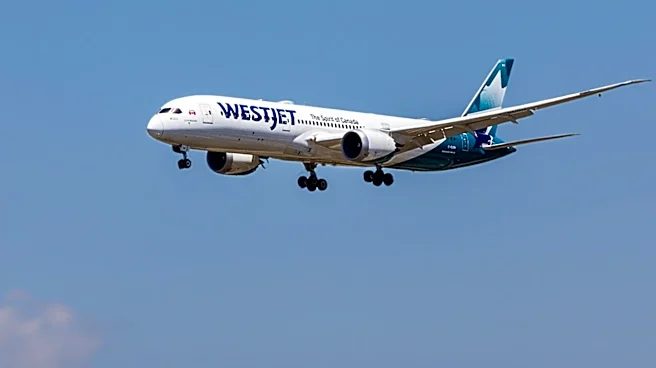
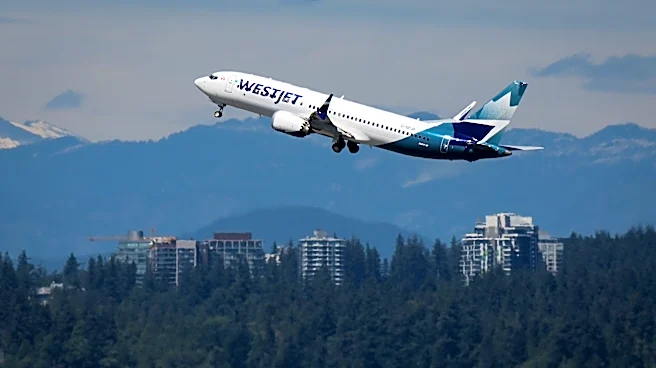
WestJet flight attendants, represented by the Canadian Union of Public Employees, have gone on strike over a pay dispute, leading to the cancellation of over 300 flights. The strike, announced on the union's Facebook page, affects Canada's second-largest
airline, which is a partner of Delta Airlines. The core issue in the dispute is the compensation for duties performed by flight attendants while on the ground. The union claims some of this work is unpaid, while WestJet argues that its staff is compensated through a 'credit hour' system. Despite WestJet's proposal for a new pay standard and a double-digit wage increase, the union rejected the offer, leading to the strike. The airline has stated that it cannot operate scheduled flights on Boeing 737s or 787s, but WestJet Encore flights and code-share flights remain unaffected.
Why It's Important?
The strike by WestJet flight attendants highlights ongoing labor disputes in the airline industry, particularly concerning compensation and working conditions. This disruption affects thousands of travelers, especially during a busy travel period, and underscores the challenges airlines face in balancing operational costs with employee satisfaction. The strike could have financial implications for WestJet, potentially affecting its reputation and customer loyalty. Additionally, the situation may influence labor negotiations at other airlines, as unions and management observe the outcomes of this dispute. The broader impact on the airline industry includes potential shifts in labor relations and operational strategies as companies strive to address employee concerns while maintaining service levels.
What's Next?
Both WestJet and the union have expressed willingness to resume negotiations to reach an agreement. The outcome of these talks will be crucial in determining the resolution of the strike and the future of labor relations at WestJet. In the meantime, affected travelers will need to seek refunds or re-accommodations, and the airline will need to manage customer communications effectively. The situation may also prompt other airlines to review their labor practices and compensation structures to prevent similar disruptions. Industry stakeholders will be closely monitoring the negotiations and any potential agreements that could set new standards for employee compensation in the airline sector.