




What's Happening?
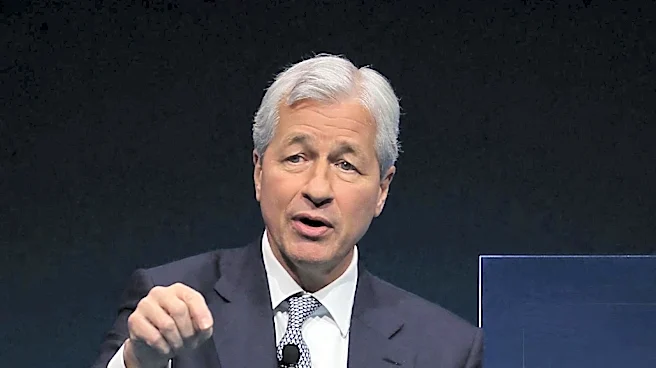
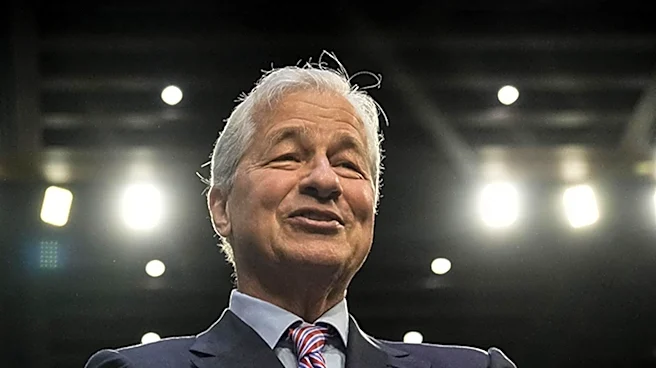
Jamie Dimon, CEO of JPMorgan Chase, has publicly expressed strong confidence in the U.S. dollar retaining its position as the world's leading reserve currency. Speaking at the Economic Club of Chicago, Dimon countered ongoing debates and concerns among
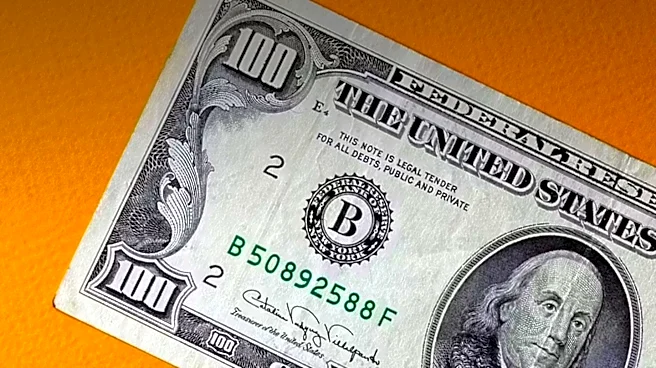
some economists regarding the dollar's future dominance. He asserted that the dollar's preeminence is secure as long as the United States maintains its superior military strength and robust economy. Dimon highlighted that these two factors are critical in ensuring global stability and investor confidence, making the U.S. a safe and desirable destination for international capital. Currently, the U.S. dollar accounts for 58.5% of total global foreign exchange reserves, significantly outpacing the euro (19%) and the Japanese yen (5.6%), according to Federal Reserve data from 2024. Dimon's remarks underscore a belief that the fundamental strengths of the U.S. will continue to underpin the dollar's global role.
Why It's Important?
The U.S. dollar's status as the primary global reserve currency offers significant advantages to the American economy and its citizens. This status creates consistent international demand for the dollar, which helps maintain its value relative to other currencies and contributes to lower U.S. interest rates. Lower interest rates, in turn, enable American consumers, businesses, and the government to borrow money more affordably, fostering economic activity and growth. Should the dollar lose this status, a June 2026 Stanford University research paper projected severe adverse consequences, including an 8.8% depreciation of the dollar, a 0.9% rise in the U.S. real interest rate, and an aggregate wealth loss equivalent to approximately one year of U.S. GDP, estimated at $30.8 trillion as of 2025. Dimon's confidence, therefore, is crucial for investor sentiment and for reinforcing the perception of stability in U.S. dollar-denominated assets, which are widely held globally.
What's Next?
If Jamie Dimon's assessment holds true, the U.S. dollar is expected to continue its role as the dominant global reserve currency, which would likely sustain demand for U.S. dollar-denominated assets. This scenario would be favorable for investors in U.S. stocks and bonds, as continued economic strength and dollar stability tend to benefit large-cap American companies. Investors bullish on the U.S. dollar's enduring strength might continue to favor investments like S&P 500 ETFs, which track the performance of the 500 largest publicly traded companies in America. Conversely, any perceived weakening of the U.S. military or economic standing could reignite concerns about the dollar's reserve status, potentially leading to shifts in global investment strategies and increased volatility in currency markets. However, Dimon's current outlook suggests a stable path forward, contingent on maintaining core U.S. strengths.
Beyond the Headlines
The debate surrounding the U.S. dollar's reserve currency status extends beyond immediate economic indicators, touching upon geopolitical power dynamics and the future of global financial architecture. Dimon's emphasis on the U.S. military's role highlights the often-understated connection between national security and economic stability. A strong military is perceived as a guarantor of global trade routes and international order, which in turn fosters confidence in the U.S. financial system. The ongoing discussions about de-dollarization by some nations, particularly Russia and China, represent a challenge to this established order. However, Dimon's argument suggests that as long as the U.S. maintains its dual pillars of military and economic might, alternative currencies face significant hurdles in replicating the dollar's widespread acceptance, liquidity, and perceived safety. This perspective underscores the complex interplay between hard power, economic influence, and the stability of the international monetary system.