




What's Happening?
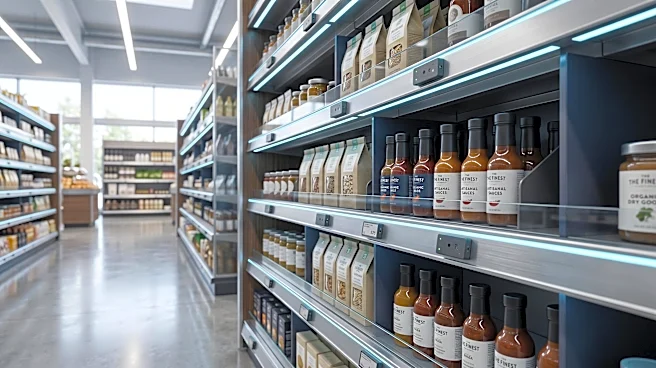
Vusion is implementing Bluetooth Low Energy (BLE) technology through its EdgeSense infrastructure to transform retail shelf space into an intelligent operational layer. This technology aims to improve product locationing, streamline associate workflows,
and enhance e-commerce fulfillment within physical stores. By embedding BLE into shelves, retailers can achieve precise product locationing, guiding associates to correct shelf locations for replenishment, inventory management, and online order fulfillment. The system also supports 'pick-to-light' capabilities for e-commerce, providing visual guidance to associates for faster and more accurate order picking, and 'stock-to-light' for efficient shelf replenishment. This integration helps address challenges like locating products, resolving shelf gaps, and providing clear information to store teams, ultimately impacting both store operations and the shopper experience.
Why It's Important?
The adoption of BLE technology in retail is significant for U.S. businesses as it directly addresses operational inefficiencies and aims to improve customer satisfaction in an increasingly competitive market. By reducing the time associates spend searching for products and improving the accuracy of order fulfillment, retailers can lower operational costs and enhance productivity. This technology is particularly crucial for stores that double as e-commerce fulfillment centers, as it streamlines the complex process of picking online orders from a retail environment. The ability to quickly identify shelf gaps and guide replenishment efforts can prevent lost sales due to out-of-stock items, directly impacting revenue. Furthermore, by connecting shelf-level information with broader operational systems, retailers gain better visibility into store conditions, enabling more informed decision-making and stronger overall store execution.
What's Next?
Retailers are expected to continue integrating advanced technologies like Vusion's BLE system to adapt to evolving consumer behaviors and operational demands. The focus will likely be on expanding the use of connected shelf infrastructure to further optimize in-store processes and enhance the synergy between physical and digital retail channels. Future developments may include more sophisticated data analytics derived from BLE-enabled shelves, providing deeper insights into product movement, customer engagement, and operational bottlenecks. As e-commerce continues to grow, the demand for efficient in-store fulfillment solutions will drive further innovation in this area, potentially leading to wider adoption of 'pick-to-light' and 'stock-to-light' systems across various retail sectors. The ongoing goal will be to create a more seamless and efficient shopping experience for customers while maximizing operational effectiveness for retailers.
Beyond the Headlines
The shift towards intelligent, connected retail environments through technologies like BLE has broader implications for the future of brick-and-mortar stores. It signifies a move away from traditional, static retail spaces towards dynamic, data-driven ecosystems. This evolution could lead to a redefinition of the role of physical stores, transforming them into highly efficient hubs that serve multiple functions, including product display, immediate purchase, and e-commerce fulfillment. The increased reliance on technology for operational guidance also raises questions about the changing skill sets required for retail associates, emphasizing technological literacy alongside traditional customer service skills. Ultimately, this trend points towards a future where the line between online and offline shopping experiences becomes increasingly blurred, with technology acting as the bridge to create a truly 'Connected Commerce' environment.