






What's Happening?
The surge in artificial intelligence (AI) data centers is creating a significant increase in demand for power and embedded chips, extending beyond just memory and advanced processors. Park Jung-seo, head of Texas Instruments Incorporated Korea, highlighted
this trend on November 11 at Coex in Seoul. He explained that AI data centers require substantial power supply and cooling systems, which in turn necessitate voltage-regulating chips and semiconductors for controlling sensors and motors. This demand is further compounded by the recovery in industrial equipment and the automotive market, leading to tightening supply pressures for these specific types of chips. While chipmakers are expanding production for memory and advanced foundry lines, industrial chips often utilize different, more mature manufacturing processes (28–130 nm nodes), where investment to boost capacity is less concentrated compared to high-value, advanced nodes. Texas Instruments, a major player in analog chips for power management and signal processing, has seen its third-quarter data center revenue jump approximately 95% year-over-year, with industrial revenue growing over 40%.
Why It's Important?
This shift in semiconductor demand has significant implications for the U.S. technology sector and broader industries. The increased need for power and embedded chips, which are crucial for the foundational infrastructure of AI, indicates a bottleneck that could affect the rapid deployment and efficiency of AI technologies. U.S. companies like Texas Instruments, which specialize in analog and embedded chips, are well-positioned to capitalize on this demand, as evidenced by their substantial revenue growth in related sectors. However, the limited capacity in mature process nodes for these industrial chips could lead to supply chain challenges, potentially impacting manufacturing costs and timelines for various industries, including automotive and industrial equipment, which rely heavily on these components. The situation underscores the need for diversified investment across different semiconductor manufacturing processes to support the evolving demands of the AI era.
What's Next?
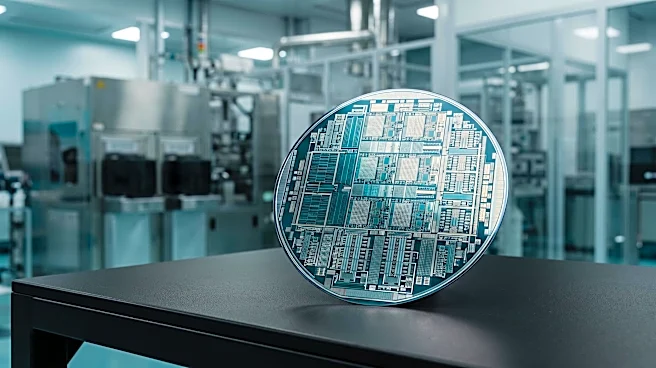
The demand for power and embedded chips is expected to continue its upward trajectory as AI data centers expand and legacy industries recover. Texas Instruments is actively addressing this by focusing on its in-house manufacturing capabilities, including ramping up production on 300 mm wafers to enhance supply and cost competitiveness. The company is also innovating in power delivery solutions, such as an 800-volt (V) direct-current (DC) design developed with Nvidia, aimed at improving power efficiency in data centers. This suggests a future where data center power architectures may evolve to reduce energy loss. The ongoing investment in advanced nodes for GPUs and CPUs will need to be complemented by strategic investments in mature node capacity to prevent bottlenecks in the broader AI ecosystem. Companies will likely continue to explore vertical integration and diversified supply chain strategies to mitigate risks associated with tight chip supplies.
Beyond the Headlines
The growing demand for power and embedded chips highlights a critical, often overlooked, aspect of the AI revolution: the foundational infrastructure required to support advanced computing. While much attention is given to the cutting-edge AI processors, the efficiency and reliability of AI systems are equally dependent on robust power management and control systems. This situation could drive innovation in energy efficiency within data centers, pushing for new standards and technologies to reduce power consumption and heat generation. Furthermore, it underscores the strategic importance of companies that produce these less glamorous but essential components, potentially leading to increased geopolitical competition for control over these manufacturing capabilities. The long-term implications could include a re-evaluation of semiconductor manufacturing strategies, emphasizing a balanced approach to investment across both advanced and mature process technologies to ensure a resilient global supply chain for all critical chip types.