


What's Happening?
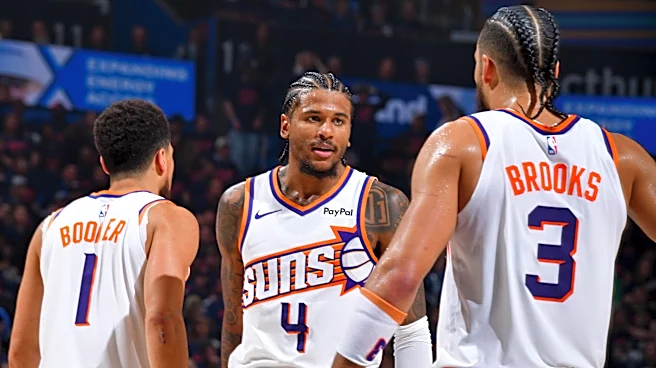
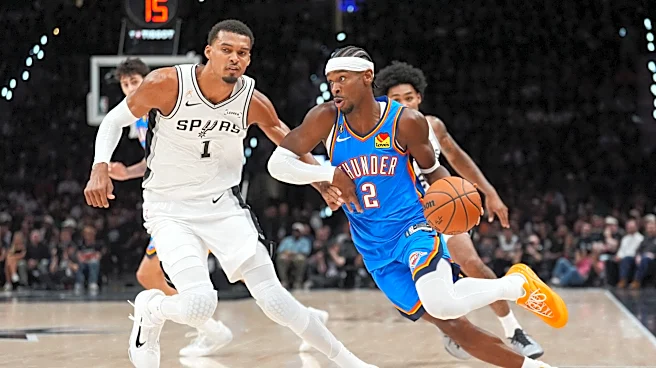
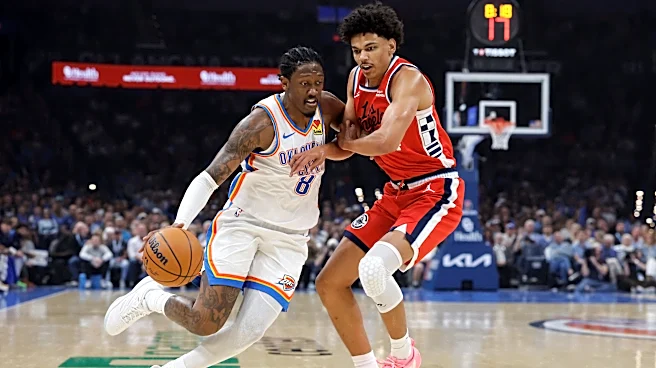
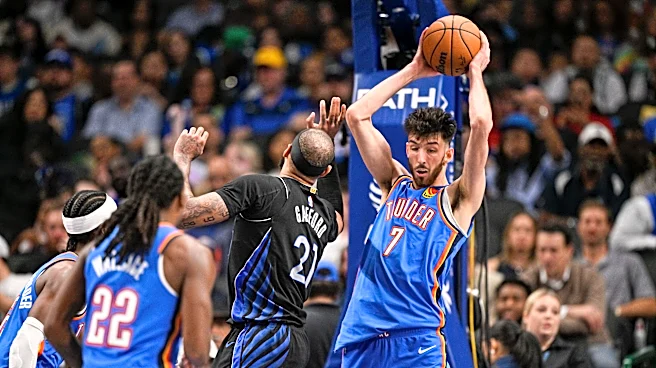
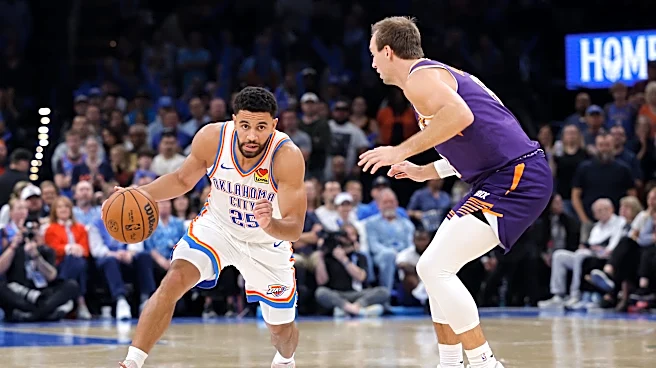
NBA player Dillon Brooks has publicly criticized league referees, alleging preferential treatment towards Oklahoma City Thunder players, particularly regarding 'flopping' calls. Following a 125-114 loss to Oklahoma City, Brooks stated that referees maintain
a 'list of floppers' and that the Thunder frequently flop but are not penalized due to their 'pedigree.' He emphasized that referees are human and make subjective calls. Brooks also referenced a specific incident from a previous game where he received a technical foul, arguing that the opposing player should have also been assessed a technical. He expressed frustration with flagrant foul calls, asserting that basketball is inherently a physical game. In the Suns' loss to the Thunder, Brooks contributed 19 points, 5 rebounds, 5 assists, 3 steals, and 1 block, including 3 three-pointers.
Why It's Important?
Dillon Brooks' comments highlight ongoing tensions between NBA players and officiating, a recurring theme in professional basketball. Accusations of preferential treatment based on a team's or player's 'pedigree' can undermine the perceived fairness and integrity of the game. Such statements from prominent players can fuel fan debate and potentially pressure the league to review officiating standards and consistency. If players believe calls are subjective and biased, it could lead to increased frustration on the court, potentially impacting game flow and player conduct. The discussion around 'flopping' and flagrant fouls also touches upon the balance between maintaining player safety and preserving the physical nature of basketball, a core aspect of the sport's appeal.
What's Next?
Brooks' remarks could prompt a response from the NBA, potentially in the form of a fine for public criticism of officiating, or a statement from the league office addressing the concerns about referee consistency. It may also lead to increased scrutiny of officiating in future games involving Brooks and the Thunder. Other players and coaches might weigh in on the debate, either supporting Brooks' claims or defending the referees. The NBA Referees Association could also issue a statement to clarify their protocols or defend their members. This incident adds to the broader conversation about how the league manages player conduct, game integrity, and the subjective nature of officiating in a high-stakes professional sport.
Beyond the Headlines
The controversy surrounding Dillon Brooks' comments extends beyond individual game calls, touching upon the broader perception of fairness and equity in professional sports. The idea of a 'pedigree' influencing officiating suggests an inherent bias that could favor established teams or star players, potentially disadvantaging newer or less prominent teams. This raises questions about the psychological impact on players who feel unfairly treated and how such perceptions might affect team morale and performance. Furthermore, the debate over 'flopping' and physical play reflects an ongoing challenge for the NBA: how to balance the entertainment value of a physical game with the need to protect players from injury and maintain sportsmanship. This incident could reignite discussions about implementing more objective review systems or enhancing transparency in referee decision-making.