






What's Happening?
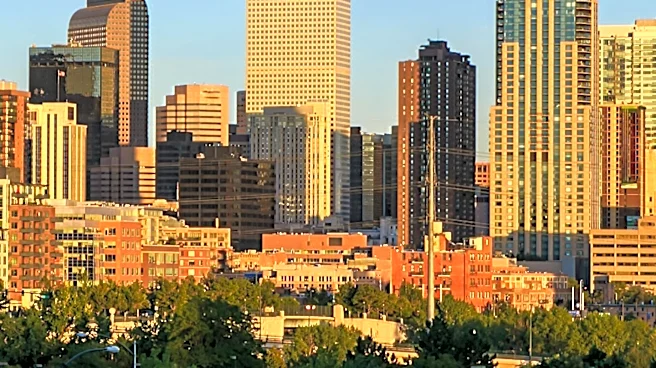
Downtown Denver is experiencing a significant trend of converting vacant office buildings into residential housing, as office vacancies hover around 38%. This shift is particularly evident in Upper Downtown, where newer office towers are being sold at
substantially reduced prices for apartment conversions. For instance, developer Asher Luzzatto has acquired four buildings totaling 1.75 million square feet—5% of downtown's office supply—at bargain prices, with plans to create hundreds of apartments and hotel rooms. This includes the Denver Energy Center, which sold for $5.25 million after previously fetching $176 million a decade ago. Even historic buildings like the former Denver National Bank building, now known as The Vault, are being considered for residential or hospitality conversions due to 100% vacancy despite a $22.4 million pre-pandemic renovation. The move comes as major tenants, such as Optiv Security, relocate their headquarters, further exacerbating the office vacancy issue.
Why It's Important?
This trend signifies a major restructuring of Denver's urban core, with profound implications for its real estate market and urban planning. The conversion of office spaces to residential units could help address the city's housing shortage while revitalizing underutilized commercial areas. However, it also presents challenges, as converting office buildings, especially newer ones, into residential spaces is complex due to fundamental differences in architectural design and infrastructure, such as plumbing and HVAC systems. The low acquisition costs for developers purchasing these vacant office towers could lead to more affordable housing options, but the high costs associated with extensive renovations might offset some of these savings. This transformation could also alter the character of downtown, shifting it from a primarily business district to a more mixed-use, residential-centric area, impacting local businesses and daily commutes.
What's Next?
The future will likely see continued efforts to repurpose vacant office spaces in downtown Denver, with more developers exploring residential conversions. The success of projects like those undertaken by Asher Luzzatto will serve as case studies for future developments. Stakeholders, including the Denver Downtown Development Authority (DDA), are actively supporting these initiatives through low-interest loans and other incentives, indicating a concerted effort to revitalize the area. However, the technical and financial complexities of these conversions mean that progress may be gradual. The market will also be watching how these new residential units are absorbed and whether they genuinely contribute to alleviating housing pressures. Additionally, the long-term economic stability of Denver's downtown will depend on its ability to attract new businesses and residents, balancing commercial and residential needs.
Beyond the Headlines
The conversion trend in Denver reflects a broader national challenge faced by many urban centers grappling with post-pandemic work-from-home dynamics and declining office demand. This shift raises questions about the long-term viability of traditional central business districts and the need for adaptive urban planning strategies. Ethically, these conversions present an opportunity to create more equitable housing options, but there's also a risk that new residential units might cater primarily to higher-income residents, exacerbating existing affordability issues. Legally, zoning laws and building codes may need to be adapted to facilitate these conversions more efficiently. Culturally, a more residential downtown could foster a different kind of urban life, with increased demand for local amenities, services, and public spaces, potentially transforming the social fabric of the city center.