









What's Happening?
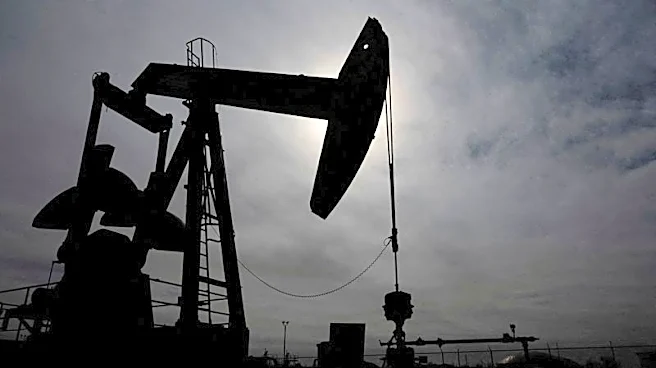
U.S. oil prices briefly fell below $70 per barrel as increased oil exports from the Middle East, including Libya, have eased supply concerns. The price of West Texas Intermediate (WTI) crude, a benchmark for U.S. oil, dropped to $69.63 before settling
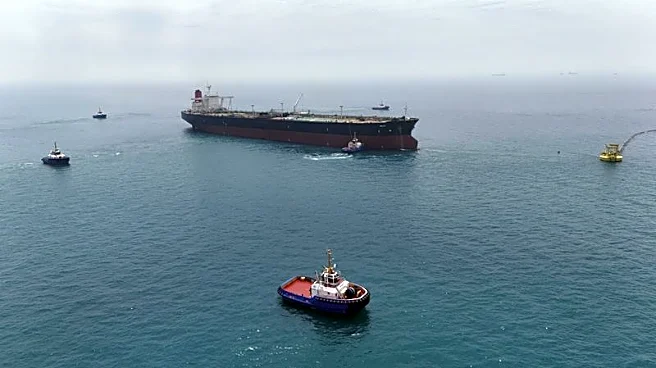
at $70.34. This decline is attributed to the resumption of tanker movements through the Strait of Hormuz and the return of Middle Eastern oil to the market. Additionally, the significance of the Cushing, Oklahoma storage hub is waning as more oil production is directed towards the Gulf Coast for exports. The U.S. Energy Information Administration reported that stocks at Cushing have fallen to their lowest level in 12 years, standing at about 19 million barrels.
Why It's Important?
The drop in U.S. oil prices reflects a shift in global oil supply dynamics, with increased exports from the Middle East alleviating previous supply constraints. This development impacts U.S. oil producers and the broader energy market, as it influences pricing and storage strategies. The strategic petroleum reserve releases by the U.S. government have also played a role in stabilizing prices. The shift of oil storage and export focus from Cushing to the Gulf Coast indicates a realignment in U.S. oil logistics, potentially affecting regional economies and employment in the oil sector.
What's Next?
Analysts predict that U.S. exports may ease, and more oil could flow towards Cushing in the coming months. This is due to the unlocking of global supply as stranded tankers exit the Strait of Hormuz following an interim peace deal between the U.S. and Iran. Stocks at Cushing are expected to build by around 800,000 barrels next week, which could influence future pricing and storage decisions.