





What's Happening?
Copenhagen Fashion Week recently showcased a distinct street style that prioritizes personal expression over conventional aspirational looks. The event highlighted a blend of functional and irreverent fashion elements. Key styling trends observed included
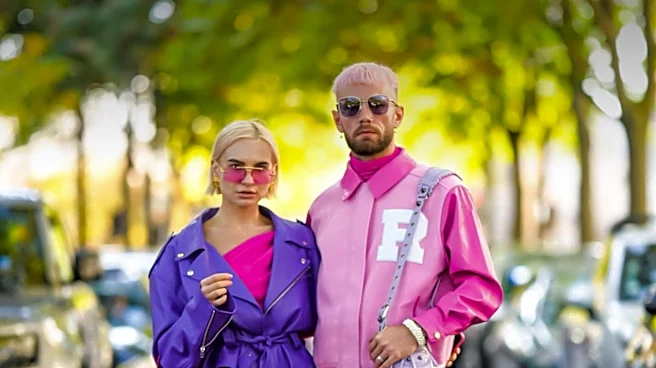
integrating sequins and sparkly attire into everyday outfits, and pairing balloon pants with belts for added detail. The street style in Copenhagen is characterized by its 'considered dissonance,' where diverse elements like gauzy skirts with technical outerwear, or hyper-feminine transparency with clunky flats, coexist without appearing overly 'styled.' This approach distinguishes Copenhagen from more codified fashion weeks in cities like Paris or Milan, emphasizing individual emotions and a pragmatic yet effortlessly stylish aesthetic. The focus is on how clothes are worn and personalized, rather than strict adherence to runway trends.
Why It's Important?
The trends emerging from Copenhagen Fashion Week reflect a broader shift in the fashion industry towards authenticity and individual expression, moving away from highly curated, aspirational looks. This emphasis on functional yet irreverent style can influence U.S. fashion markets by promoting more accessible and personal styling choices. For consumers, it encourages creativity and the integration of 'special occasion' items into daily wear, potentially boosting sales of versatile pieces. Retailers and brands in the U.S. might adapt by offering more adaptable clothing lines that cater to this blend of comfort, practicality, and unique flair. The embrace of 'imperfect' or unconventional styling also challenges traditional beauty standards in fashion, potentially fostering a more inclusive and diverse industry landscape. This shift could lead to a greater appreciation for individual style over brand-driven trends, impacting how fashion is marketed and consumed.
What's Next?
Following Copenhagen Fashion Week, it is anticipated that these street style trends will gradually permeate mainstream fashion in the U.S. Fashion influencers and stylists are likely to adopt and popularize these looks, leading to increased visibility and demand. Brands may begin to incorporate elements like everyday sequins, belted balloon pants, and Y2K-inspired accessories into their upcoming collections. Consumers can expect to see more versatile and personally expressive clothing options available in stores. The emphasis on mixing high-end with casual, and embracing 'imperfect' styling, could also influence fashion editorial content and marketing campaigns, further solidifying these trends. The continued evolution of this 'personal rather than aspirational' aesthetic suggests a sustained move towards more authentic and individualistic fashion choices.
Beyond the Headlines
The Copenhagen Fashion Week's emphasis on personal expression and 'studied effortlessness' over aspirational looks points to a deeper cultural shift in how individuals relate to fashion. It suggests a rejection of rigid fashion norms and an embrace of clothing as a tool for self-identity and comfort, rather than solely for status or conformity. This movement could have long-term implications for sustainable fashion, as consumers might be encouraged to invest in versatile pieces that can be styled in multiple ways, extending the lifespan of their wardrobes. Ethically, it promotes a more democratic approach to fashion, where individual creativity is valued above brand dictates. This shift also highlights the growing influence of street style and social media in shaping fashion trends, often bypassing traditional runway-to-retail cycles and empowering individual style-makers.