







What's Happening?
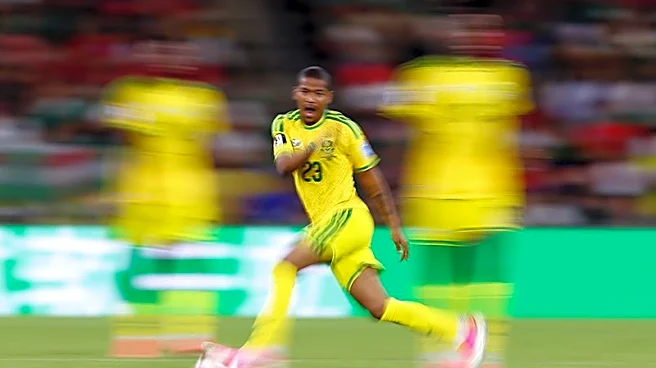
Police in Cape Town, South Africa, have launched an investigation into the death of Jayden Adams, a 25-year-old midfielder for South Africa's national football team. Adams was found dead at a residence in the Schotsche Kloof neighborhood shortly after
returning from the FIFA World Cup in North America. The South African Football Players Union confirmed his death, but the cause has not been disclosed. Adams participated in two of the three World Cup matches for South Africa, playing against the Czech Republic and Mexico, and was a substitute in a match against South Korea. His death follows the recent passing of his grandmother, which occurred just before a match against the Czech Republic.
Why It's Important?
The death of Jayden Adams has significant implications for the South African sports community and highlights the pressures faced by athletes on the international stage. His passing has prompted widespread mourning and reflection on the mental and emotional challenges athletes endure, especially when dealing with personal loss. The investigation into his death may also bring attention to the support systems available for athletes dealing with such pressures. The incident underscores the need for comprehensive mental health resources for sports professionals, which could influence future policies and support structures within the sports industry.
What's Next?
As the investigation into Jayden Adams' death continues, there may be increased scrutiny on the circumstances surrounding his passing and the support he received. The outcome of the investigation could lead to calls for enhanced mental health and support services for athletes. Additionally, the South African sports community may engage in discussions about how to better support players dealing with personal and professional challenges. The findings could also influence international sports organizations to review their own support systems for athletes.
Beyond the Headlines
The tragic death of Jayden Adams may prompt broader discussions about the mental health of athletes and the pressures of performing on the world stage. It highlights the need for a cultural shift in how mental health is perceived and addressed in sports. This incident could lead to increased advocacy for mental health awareness and the implementation of more robust support systems for athletes globally. The sports community may also reflect on the importance of balancing professional commitments with personal well-being.