






What's Happening?
Both gold and Bitcoin have experienced significant declines, challenging their traditional roles as safe-haven assets and exposing potential vulnerabilities in investor portfolios. Gold has suffered its steepest two-month decline in over four decades,
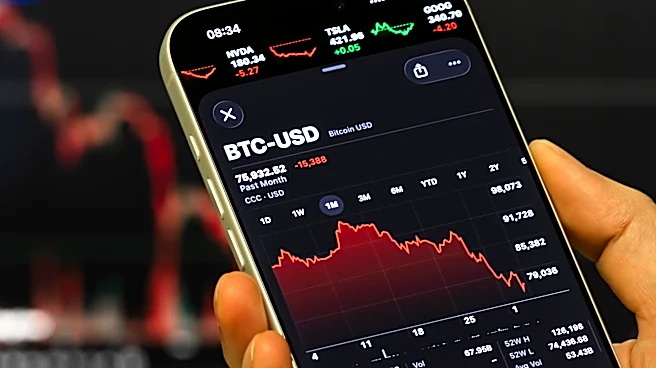
with prices tumbling 24.6% over 60 days through November 23, marking its worst performance over such a period since 1982, according to commodity analyst Lukas Kuemmerle. Bitcoin has also seen a substantial drop, surrendering more than half its value from its all-time high, with $827 million in leveraged cryptocurrency positions liquidated within 24 hours. This simultaneous underperformance suggests that these assets, often considered diversifiers, are failing to protect investors during Wall Street's latest sell-off, partly due to their liquidity and the need for investors to raise cash.
Why It's Important?
This synchronized downturn in gold and Bitcoin has significant implications for U.S. investors and financial advisors. It highlights a critical flaw in portfolio construction where reliance on these two alternative assets alone may not provide adequate protection against market turmoil, especially during periods of monetary tightening. The event underscores that genuine diversification requires assets that respond differently to the same economic pressures, rather than simply owning different asset classes. Investors who viewed Bitcoin as 'digital gold' are now confronting its behavior as a speculative technology investment, while gold's liquidity makes it susceptible to selling when cash is needed. This situation could lead to a re-evaluation of diversification strategies and a greater emphasis on holding emergency cash and short-term Treasury securities.
What's Next?
Investors are likely to re-evaluate their portfolio diversification strategies in light of these developments. Financial advisors may increasingly recommend a more nuanced approach to asset allocation, emphasizing the need for assets that genuinely offer uncorrelated returns during economic downturns. While gold's longer-term investment thesis remains intact, with some analysts predicting a recovery as monetary conditions become more favorable, its recent performance serves as a cautionary tale. Bitcoin's future as a diversifier will also be under scrutiny, with investors needing to distinguish between its potential for speculative returns and its ability to preserve wealth during crises. The focus will shift towards ensuring portfolios are robust enough to withstand various market pressures, potentially leading to increased demand for traditional safe havens like short-term government bonds.
Beyond the Headlines
The simultaneous decline of gold and Bitcoin raises deeper questions about the nature of 'safe-haven' assets in a globalized and interconnected financial system. It challenges the conventional wisdom that these assets inherently provide protection against market volatility. This event could accelerate the development of new financial instruments or investment strategies designed to offer more reliable diversification. Furthermore, it highlights the psychological aspect of investing, where investor behavior during times of stress can override the theoretical benefits of certain assets. The incident also underscores the growing influence of macroeconomic factors, such as rising interest rates and a strengthening dollar, on a broader range of assets, including those traditionally considered immune to such pressures.