








What's Happening?
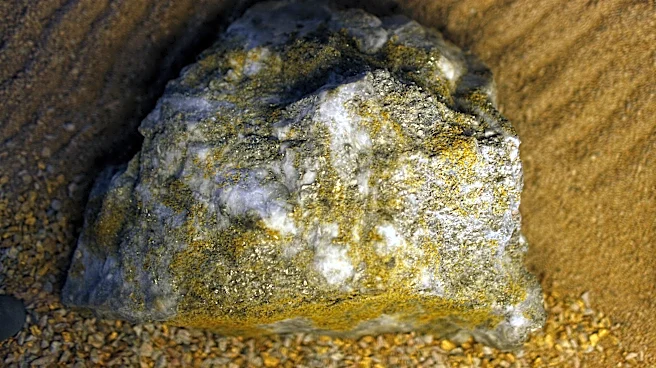
GoldArc Resources has successfully completed the first phase of grade control drilling at its Mt Stirling Gold Project in Western Australia. The company reported significant assay results, indicating wide zones of gold mineralization. Notable findings
include intercepts of 21 meters at 2.36 grams per tonne (g/t) gold from 7 meters and 16 meters at 2.13 g/t gold from 1 meter, with higher-grade zones within these intercepts. This data will be integrated into updated mining models and mine planning as the company prepares for the approval of its mining and development closure plan. The drilling program, which is part of a 34,000-meter reverse circulation initiative, is fully funded by BML Ventures under a 50/50 net profit share agreement. GoldArc is now focusing on the adjacent Mt Stirling Well deposit, where additional drilling has confirmed near-surface gold mineralization.
Why It's Important?
The completion of this drilling phase marks a significant milestone for GoldArc Resources, as it supports the geological model and enhances the company's understanding of the gold deposits at Mt Stirling. The promising assay results could potentially lead to increased investor confidence and further development of the project. This development is crucial for GoldArc's strategic plans to expand its gold production capabilities in the Eastern Goldfields region. The successful partnership with BML Ventures also highlights the importance of collaborative funding arrangements in advancing mining projects. The results could have broader implications for the mining industry, particularly in terms of resource estimation and project viability in gold-rich regions.
What's Next?
GoldArc Resources plans to continue its exploration efforts at the Mt Stirling Well deposit, with further drilling and assay analysis to refine its understanding of the gold mineralization. The company is also preparing for the next stages of mine planning and development, pending regulatory approvals. Stakeholders, including investors and local communities, will be closely monitoring the progress of these developments. The outcomes of these efforts could influence future investment decisions and strategic partnerships within the mining sector.