




What's Happening?
The fashion industry is experiencing a significant shift towards 'freaky footwear,' characterized by deliberately strange and polarizing designs. This trend, once confined to catwalks, is now mainstream, with styles like Vibram’s FiveFingers and cloven
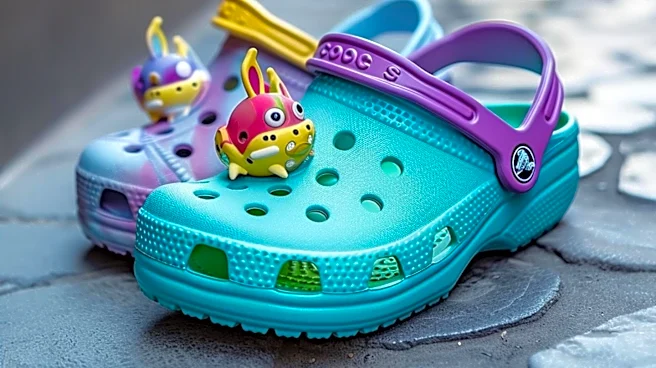
hoof-like Tabi shoes seeing substantial increases in demand. According to Lyst, a fashion search platform, demand for Tabi styles has quadrupled since 2022, and FiveFingers are up 57% year over year. Designers such as Simone Rocha have collaborated with Crocs to create embellished versions, while Etro, Dior, and Valentino are reimagining Birkenstocks. Even high-street retailers are championing 'Frankenshoes,' which are amalgamations of different shoe types, such as 'sneakerinas' (sneaker and ballerina flat) and 'snoafers' (sneaker and penny loafer). This movement is seen as a departure from conventional beauty standards in footwear, with some designs even featuring inverted heels or 'nipple heels' measuring half an inch.
Why It's Important?
This trend signifies a broader cultural and societal shift in how individuals express themselves through fashion, moving away from traditional notions of beauty and practicality. The embrace of 'ugly' or 'absurd' footwear challenges established norms and offers consumers a way to make a statement without committing to an entire look. This shift can impact the footwear market, influencing design, production, and marketing strategies for both luxury brands and high-street retailers. It also reflects a desire for individuality and a rejection of conformity, potentially leading to increased innovation in shoe design and materials. The trend's popularity suggests a growing consumer segment that values uniqueness and comfort over conventional aesthetics, which could reshape future fashion cycles and consumer expectations.
What's Next?
The continued evolution of 'freaky footwear' is anticipated, with fashion experts suggesting that as consumers become comfortable with current unconventional styles, designers will seek even 'weirder' innovations. This could lead to further experimentation with materials, forms, and functionalities in shoes. The trend may also continue to influence other areas of fashion, encouraging more rebellious and liberating styles across clothing and accessories. Major stakeholders, including fashion houses, retailers, and trend forecasters, will likely monitor consumer adoption and adapt their offerings to meet this evolving demand. The emphasis on comfort and personal expression is expected to persist, potentially solidifying 'freaky footwear' as a long-term fixture in the fashion landscape rather than a fleeting fad.
Beyond the Headlines
The rise of 'freaky footwear' carries deeper implications, touching upon themes of rebellion, self-expression, and societal commentary. Some interpret the trend as a 'punk spirit' that challenges conventional beauty and propriety, allowing wearers to 'play with elements of ugliness.' It can also be seen as a rejection of 'girlboss' culture, which emphasized polished, high-heeled looks, now deemed 'toxic' by Gen Z. Furthermore, the trend might be linked to broader socio-economic anxieties, with some young people embracing a 'soft life' that prioritizes comfort and connection to the earth, as symbolized by styles like five-finger shoes. The historical context of shoes as status symbols, from medieval poulaines to 15th-century chopines, highlights how footwear has always been a medium for social and personal statements, with today's 'freaky' styles continuing this tradition in a contemporary context.