









What's Happening?
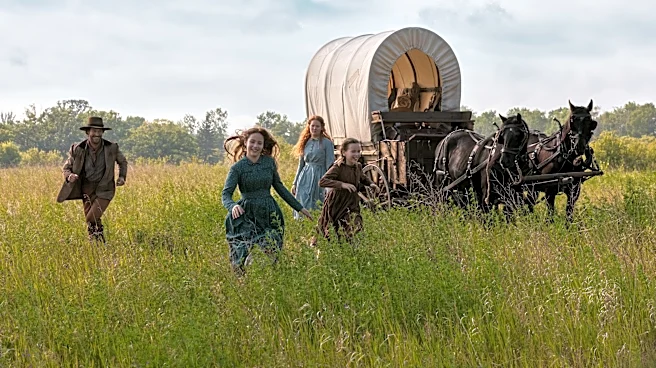
Netflix has released a reboot of the classic television series 'Little House on the Prairie,' originally based on the books by Laura Ingalls Wilder. The new series retains the original name and setting but introduces modern sensibilities and deeper character
backstories. The show focuses on the Ingalls family as they navigate life in the American West during the 1870s and 80s. Key characters include Ma, portrayed by Crosby Fitzgerald, who is depicted as a former schoolteacher with a strong will, and Pa, played by Luke Bracey, who is motivated by personal grief. The series also introduces diverse characters, including Black, mixed-race, and Native American roles, providing a broader perspective on the settlement era. The reboot aims to balance nostalgia with contemporary storytelling, addressing issues such as racism and social dynamics in the nascent town.
Why It's Important?
The reboot of 'Little House on the Prairie' is significant as it reflects a growing trend in television to revisit classic series with a modern lens. By incorporating diverse characters and addressing historical issues like racism and land displacement, the show offers a more inclusive narrative that resonates with contemporary audiences. This approach not only broadens the appeal of the series but also educates viewers on the complexities of American history. The series' focus on character development and social issues aligns with current cultural shifts towards more nuanced storytelling in media. This reboot could influence how other classic series are reimagined, potentially setting a precedent for future adaptations.
What's Next?
As the series progresses, it is likely to explore more complex social issues and character arcs, potentially leading to discussions on historical accuracy and representation in media. The reception of the show may influence Netflix and other streaming platforms to invest in similar reboots that blend nostalgia with modern themes. Viewer feedback and ratings will play a crucial role in determining the longevity of the series and its impact on the genre. Additionally, the show's success could encourage further exploration of diverse narratives within historical contexts, prompting a reevaluation of how history is portrayed in entertainment.