



What's Happening?
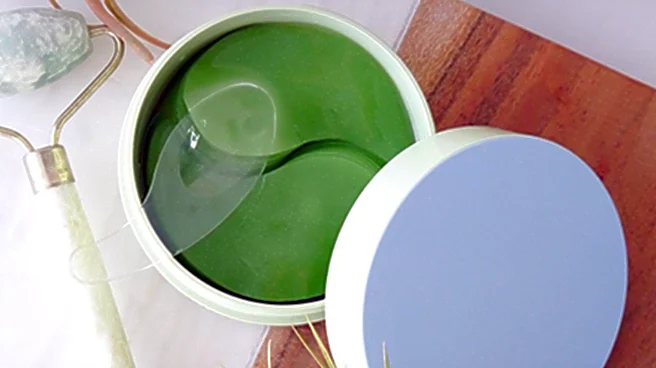
Anua's Retinol Berry Revitalizing Eye Patches are gaining significant attention, particularly after 'Real Housewives of New Jersey' star Melissa Gorga described their effect as 'filler in a jar' in a sponsored social media post. These hydrogel patches,
currently available at a discounted price of $24, are designed to address common concerns like fine lines, puffiness, and dark circles around the eyes. The product combines active ingredients such as retinol, caffeine, and niacinamide, along with antioxidant-rich berry extracts and Ultra Filling Spheres. These components work synergistically to smooth, brighten, and temporarily plump the skin, aiming to provide a refreshed appearance without the need for invasive cosmetic procedures. The multi-zone design allows for application beyond the under-eye area, including smile lines, the forehead, and neck, with results visible after just 10 minutes of wear.
Why It's Important?
The popularity of Anua's eye patches, fueled by celebrity endorsement and their affordable price point, highlights a growing trend in the U.S. beauty market: the demand for effective, non-invasive, and accessible skincare solutions that offer visible results. This product caters to consumers seeking alternatives to more expensive and invasive cosmetic treatments like injectables, providing a 'fresh-from-the-dermatologist look' without the associated costs or downtime. The emphasis on ingredients like retinol and caffeine, known for their anti-aging and de-puffing properties, resonates with a consumer base increasingly educated about skincare science. This trend could lead to increased competition in the affordable, at-home beauty treatment sector, pushing brands to innovate and offer high-performance products that deliver on their promises, ultimately benefiting consumers with more choices and potentially lower prices for effective skincare.
What's Next?
The success of products like Anua's Retinol Berry Eye Patches is likely to spur further innovation in the K-beauty and broader skincare markets, with a focus on multi-functional, ingredient-driven, and accessible at-home treatments. Consumers can expect to see more products that promise 'filler-like' or 'dermatologist-level' results without the need for professional intervention. Brands will likely invest more in research and development to create stable and effective formulations of active ingredients like retinol, peptides, and antioxidants in user-friendly formats. The role of social media and celebrity endorsements will continue to be crucial in driving product awareness and sales. However, consumers should also be mindful that while these products offer temporary improvements, they cannot replicate the permanent results of medical procedures, and gradual introduction, especially for retinol, is often recommended.
Beyond the Headlines
The rise of products like Anua's eye patches reflects a broader cultural shift towards self-care and accessible wellness. In an era where appearance is often scrutinized, these products offer a convenient and relatively low-cost way for individuals to feel more confident and refreshed. This trend also underscores the influence of K-beauty innovations, which consistently introduce novel formulations and application methods to the global market. The 'filler in a jar' marketing, while effective, also raises questions about consumer expectations and the potential for over-promising by beauty brands. It highlights the ongoing tension between the desire for instant, dramatic results and the reality of what topical skincare can achieve, prompting a need for informed consumer choices and realistic expectations.