






What's Happening?
Lainey Wilson released her new single, 'Just A Woman,' on November 18, 2026, marking a significant shift towards a more genre-fluid sound. The track, co-written with Luke Dick and Shane McAnally, features production by Grammy-winning British producer
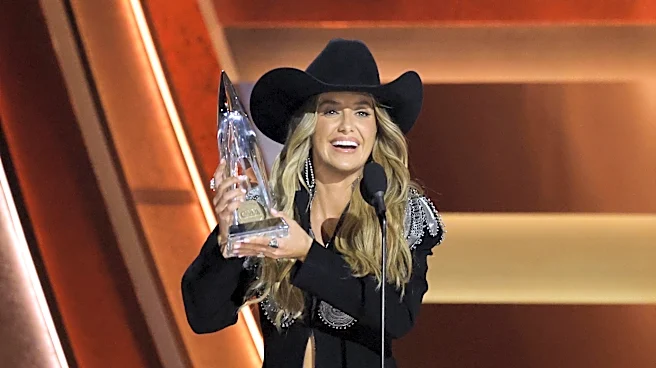
Kid Harpoon and mixing engineer Mark 'Spike' Stent, known for their work with pop artists. This new song departs from traditional country elements, incorporating soulful production, lush strings, and a vocal delivery influenced by R&B and arena pop. The release coincided with Wilson's historic appearance at the 60th Annual CMA Awards, where she became the first woman to host the ceremony solo multiple times. She also performed 'Just A Woman' live for the first time at the event, backed by an all-female string ensemble and gospel-tinged background singers. The song's lyrics explore themes of female empowerment while also acknowledging the complexities of love and commitment, drawing personal inspiration from her marriage to Devlin 'Duck' Hodges earlier in 2026.
Why It's Important?
Lainey Wilson's strategic release of 'Just A Woman' and its genre-bending sound is important as it signals a potential evolution in mainstream country music. By collaborating with producers known for pop success, Wilson is actively blurring the lines between Nashville storytelling and top-40 radio, which could influence other country artists to experiment with broader musical styles. This move challenges traditional genre boundaries and expands the commercial appeal of country music to a wider audience. Her decision to debut such a distinct sound while hosting the CMA Awards, a major platform for country music, amplifies its impact and demonstrates her confidence in this new direction. This could lead to increased cross-genre collaborations and a more diverse soundscape within the country music industry, potentially attracting new listeners who might not typically engage with the genre. Furthermore, her personal connection to the song, inspired by her marriage, adds an authentic layer that resonates with fans, reinforcing her grounded public image.
What's Next?
Following the release of 'Just A Woman' and its high-profile debut at the CMA Awards, Lainey Wilson is likely to continue promoting her new, genre-fluid sound. This could involve further collaborations with artists and producers outside the traditional country sphere, potentially leading to a full album that explores these diverse musical influences. The reception of 'Just A Woman' by both country and pop audiences will be crucial in shaping her future artistic direction and marketing strategies. Industry observers will be watching to see if this crossover appeal translates into broader commercial success and critical acclaim across different music charts. Her continued role as a prominent figure in country music, evidenced by her repeated CMA hosting duties, positions her to be a trendsetter. Other artists may observe her trajectory and consider similar genre expansions, potentially leading to a broader shift in the sound of contemporary country music.
Beyond the Headlines
Lainey Wilson's move towards a genre-fluid sound with 'Just A Woman' represents more than just a musical shift; it reflects a broader cultural trend of artists breaking free from traditional genre constraints. This development challenges the long-standing categorization within the music industry, which often places artists into rigid boxes. By embracing elements of R&B and pop, Wilson is not only expanding her artistic expression but also potentially redefining what 'country music' can encompass in the modern era. This could lead to a more inclusive and diverse music landscape, where artists are judged more on their artistic merit and less on their adherence to genre conventions. Ethically, it promotes artistic freedom and innovation, encouraging musicians to explore their creativity without fear of alienating their core audience. This evolution might also spark discussions about the future of music awards and categorization, as traditional genre-specific awards may need to adapt to accommodate increasingly blended musical styles.