






What's Happening?
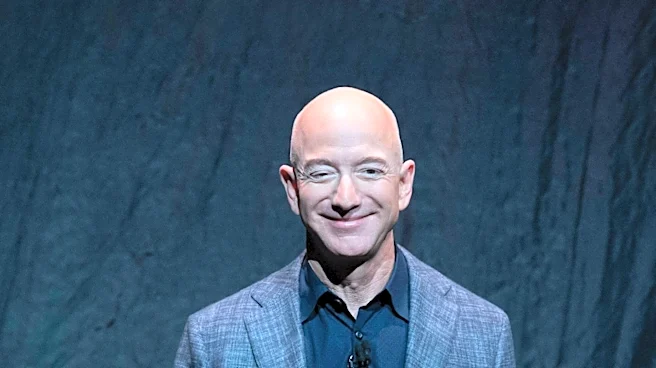
Jeff Bezos, the founder of Amazon, has stated that advancements in artificial intelligence (AI) could eliminate the necessity for two-earner households in the future. In an interview on October 7, Bezos suggested that increased productivity driven by
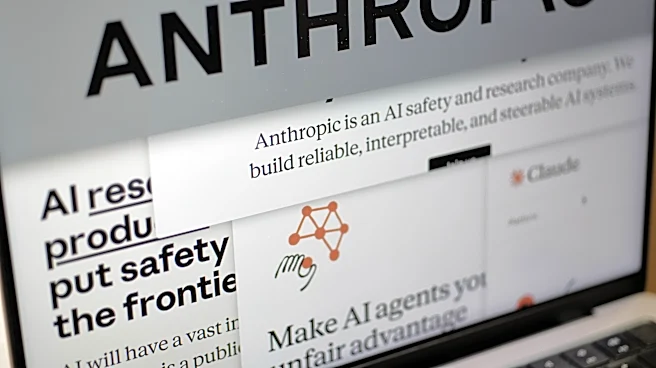
AI would allow families to maintain their lifestyle with only one income, if they choose. He also anticipates a potential labor shortage as a result of these technological shifts. Bezos is actively involved in developing AI technology as co-CEO of Project Prometheus, an AI startup focused on creating user-friendly engineering tools. This perspective contrasts with some industry views, such as that of Anthropic CEO Dario Amodei, who predicted in 2025 that AI could eliminate up to half of entry-level white-collar jobs within five years and potentially raise unemployment to between 10% and 20%. Currently, dual-income households are common in the U.S., with the Bureau of Labor Statistics (BLS) reporting that both spouses worked in nearly half of married-couple families in 2025.
Why It's Important?
Bezos's prediction carries significant implications for the U.S. economy and workforce dynamics. If AI indeed leads to a scenario where one income can comfortably support a household, it could fundamentally alter labor participation rates, consumer spending patterns, and the demand for certain types of jobs. A shift away from two-earner households could impact industries reliant on dual incomes, such as childcare services or certain consumer goods markets. Furthermore, the potential for a labor shortage, as suggested by Bezos, could drive up wages in some sectors, while the displacement of jobs, as warned by Amodei, could exacerbate economic inequality and necessitate significant retraining programs. The debate highlights a critical juncture for policymakers and businesses in preparing for the transformative effects of AI on employment and family economics. The discussion also brings to light the ongoing tension between technological advancement and its societal impact, particularly concerning job security and economic stability for American families.
What's Next?
The immediate future will likely see continued debate and research into the actual impact of AI on the job market and household incomes. Companies, particularly in the tech sector, will continue to invest heavily in AI development, aiming to enhance productivity and create new tools. Policymakers may begin to explore potential social safety nets or retraining initiatives to address job displacement concerns, while also considering how to leverage AI for economic growth. The Bureau of Labor Statistics will continue to monitor employment trends, providing data that will be crucial in assessing the real-world effects of AI on household income structures. Businesses will need to adapt their strategies to potential shifts in labor availability and consumer behavior. The ongoing development of AI tools, such as those from Project Prometheus, will be a key factor in determining the pace and extent of these changes, influencing how quickly and broadly AI's impact on the workforce is felt across the U.S.
Beyond the Headlines
Beyond the immediate economic shifts, Bezos's vision touches upon deeper societal and cultural implications. A reduction in the need for two-earner households could lead to significant changes in family structures, gender roles, and work-life balance. It might offer individuals more flexibility in career choices, education, or leisure pursuits, potentially fostering a re-evaluation of societal values around work and productivity. However, it also raises ethical questions about equitable access to the benefits of AI-driven productivity and the potential for increased wealth concentration. The transition period could be challenging, requiring robust social policies to mitigate the risks of job displacement and ensure that the benefits of AI are broadly shared. The long-term impact could reshape the American dream, moving from a focus on relentless career progression to potentially more emphasis on personal fulfillment and community engagement, provided the economic security promised by AI materializes for a wide segment of the population.