






What's Happening?
Saudi Aramco has officially launched a $7 billion petrochemicals complex, known as the Shaheen Project, in South Korea. This represents Aramco's largest single investment in the Asian country. The project, a collaboration with its South Korean subsidiary
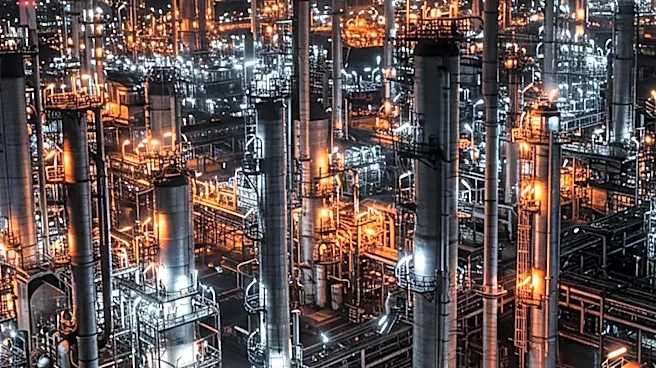
S-OIL (in which Aramco holds a 63% stake), integrates refining capabilities with Aramco’s proprietary thermal crude-to-chemicals (TC2CTM) technology. The complex features the world’s largest single steam cracker, a propylene fractionator, crude-to-chemicals conversion facilities, and polymer production units. The Shaheen Project is projected to increase S-OIL's annual petrochemical production capacity by approximately 3.2 million tons, aiming to establish the company as a significant global supplier of high-value polymers and advanced materials. This initiative aligns with Saudi Arabia's broader strategy to expand its downstream presence in key Asian markets.
Why It's Important?
This significant investment by Saudi Aramco underscores a strategic shift towards diversifying its energy portfolio and expanding its global footprint in advanced manufacturing. For the U.S. and global markets, this development could influence the supply chain of petrochemical feedstocks and advanced materials, potentially leading to increased competition or new partnership opportunities. By enhancing S-OIL's production capacity, Aramco is positioning itself to meet rising demand for petrochemicals, which are crucial for various industries, including plastics, textiles, and automotive. This move also highlights the growing importance of Asia as a key market for energy and chemical products, potentially drawing more U.S. companies to explore collaborations or competitive strategies in the region. The deployment of advanced crude-to-chemicals technology could also set new benchmarks for efficiency and product diversification in the petrochemical sector.
What's Next?
The operationalization of the Shaheen Project is expected to solidify S-OIL's position in the global petrochemical market, potentially leading to increased exports of high-value polymers and advanced materials. This could prompt other major energy companies and chemical producers to re-evaluate their investment strategies in Asia and in crude-to-chemicals technologies. Aramco's continued focus on advanced manufacturing and product diversification suggests further investments in similar projects globally, aiming to secure long-term demand for its crude and expand its downstream value chain. The success of this project could also encourage more joint ventures between Saudi entities and Asian partners, further integrating the energy and chemical industries across continents. Future developments will likely include monitoring the project's impact on global petrochemical prices and supply dynamics.
Beyond the Headlines
The Shaheen Project represents more than just an investment in petrochemical production; it signifies a broader strategic pivot for Saudi Aramco and Saudi Arabia. By moving further into downstream activities and advanced manufacturing, Saudi Arabia is working to reduce its reliance on crude oil exports and diversify its economy, a key component of its Vision 2030. This initiative also highlights the increasing technological sophistication in the energy sector, with the deployment of proprietary crude-to-chemicals technology. The long-term implications include potential shifts in global energy trade patterns, as producers seek to add more value to their raw materials before export. This could also foster greater technological exchange and collaboration between Middle Eastern and Asian economies, influencing future industrial development and innovation in both regions.