



What's Happening?
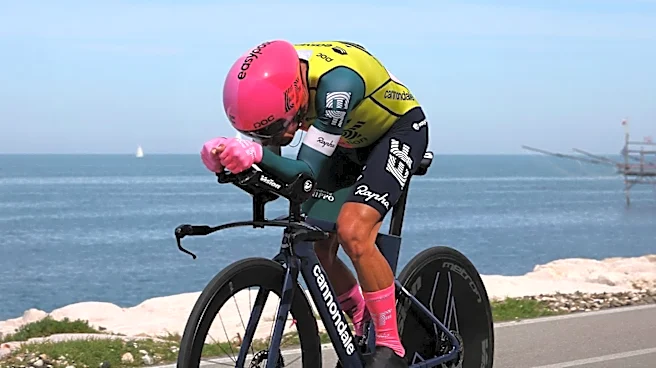
André Du Rietz, an IRONMAN triathlete, demonstrated extraordinary perseverance at IRONMAN Kalmar after his tire valve broke with 21 miles remaining on the bike course. Instead of withdrawing from the race, Du Rietz ran the remaining 21 miles to the transition
zone while carrying his bike. This unexpected turn of events meant he completed a significant portion of the bike leg on foot, wearing his cycling shoes. Upon reaching T2, despite raw and bloody feet, he transitioned to the marathon run, ultimately finishing the entire IRONMAN event. His final bike split was 7:46:59, significantly longer than his initial goal, but he completed the marathon in just over five hours, achieving an overall finish time of 14:22:31. Du Rietz's decision to continue despite the mechanical failure and physical hardship garnered significant attention and admiration.
Why It's Important?
This event highlights the extreme mental and physical fortitude required in endurance sports like IRONMAN triathlons. Du Rietz's refusal to quit, even when faced with a major setback that would lead most athletes to abandon the race, serves as a powerful example of resilience and determination. His story resonates within the athletic community, emphasizing that success is not solely defined by finishing times or qualification for championships, but also by the spirit of competition and the ability to overcome adversity. It underscores the unpredictable nature of long-distance races and the importance of adaptability. For aspiring triathletes and sports enthusiasts, it provides an inspiring narrative about pushing personal limits and maintaining a positive attitude in challenging circumstances, reinforcing the core values of endurance sports.
What's Next?
Despite not qualifying for the IRONMAN World Championship at Kalmar, Du Rietz remains undeterred. He has already scheduled IRONMAN Hamburg for next June and plans to return to Kalmar again. His goal is to secure a long-awaited slot for the Kona World Championship. This indicates his continued commitment to the sport and his ambition to achieve his competitive aspirations. His future races will likely be watched with interest by those who followed his remarkable performance at Kalmar, as he seeks to combine his demonstrated resilience with better luck to achieve his qualification goal. His story may also inspire other athletes to reconsider their options when facing similar race-day challenges.
Beyond the Headlines
Du Rietz's journey extends beyond this single race, revealing a history of persistent challenges, including a heart infection, a knee injury, a broken collarbone, and another infection that nearly prevented his participation in previous events. His ability to return to triathlon after significant health and injury setbacks, and his positive outlook despite repeated misfortunes, speaks to a deeper psychological resilience. This narrative challenges the conventional focus on optimal performance and highlights the human element of struggle and triumph in sports. It suggests that the personal journey and the lessons learned from overcoming obstacles can be as, if not more, valuable than the ultimate competitive outcome, fostering a broader appreciation for the human spirit in athletic endeavors.