




What's Happening?
Miro, a tool designed for workshops, mapping, and visual problem-solving, is increasingly being utilized in conjunction with Slack for enhanced team communication and collaboration. This integration allows teams to organize complex ideas and workflows
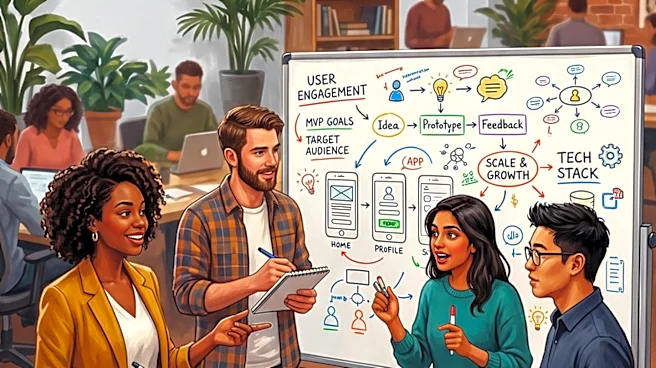
on a shared visual canvas, facilitating a more intuitive comparison of alternatives than traditional text-based communication. Miro boards can incorporate customer steps, quotes, bottlenecks, and proposed changes, enabling participants to visually identify and address disagreements. The platform also offers structured formats like Docs, Tables, and Kanban boards. The integration with Slack allows for seamless sharing of Miro boards, providing useful previews and notifying users about comments, mentions, invitations, and access requests directly within their Slack channels. This creates a feedback loop where team members can quickly access relevant boards from Slack to provide input on specific diagrams or customer steps, bridging the gap between visual collaboration and ongoing team communication.
Why It's Important?
The combined use of Miro and Slack is significant for U.S. businesses seeking to optimize their collaborative workflows, particularly for remote or hybrid teams. This integration addresses the challenge of maintaining clear communication while engaging in complex visual problem-solving. By allowing teams to move fluidly between detailed visual models in Miro and real-time discussions in Slack, companies can improve decision-making processes and project efficiency. This approach helps prevent miscommunications that can arise from purely text-based exchanges when dealing with intricate concepts. Industries reliant on design sprints, customer journey mapping, or process optimization stand to benefit significantly, as it enables a more structured and visual approach to problem identification and solution development. The ability to quickly share and receive feedback on visual artifacts directly within a communication platform streamlines project cycles and fosters a more engaged and informed team environment.
What's Next?
As businesses continue to adopt hybrid and remote work models, the demand for integrated collaboration tools like Miro and Slack is likely to grow. Future developments may focus on deeper AI integration within both platforms to further automate tasks such as summarizing board content, generating initial diagrams, or extracting key insights from discussions. This could lead to more intelligent workflows where AI assists in organizing raw visual material and contextualizing discussions. Companies will likely explore optimizing their subscription tiers for both services to balance cost and functionality, considering the varying needs of different team sizes and project complexities. The emphasis will remain on creating seamless transitions between visual ideation and actionable communication, potentially leading to new features that enhance real-time co-creation and feedback mechanisms across both platforms.
Beyond the Headlines
The synergy between Miro and Slack represents a broader shift in how organizations approach digital collaboration, moving beyond simple communication to integrated visual and interactive workspaces. This trend highlights the increasing recognition that different types of problems require different modes of interaction – some need ongoing dialogue, while others demand a shared visual understanding. The ethical implications revolve around data privacy and access management, especially when sharing sensitive project details across integrated platforms and involving external participants. Legally, companies must ensure compliance with data protection regulations when using these tools for collaborative work that involves proprietary information or customer data. Culturally, this integration fosters a more transparent and inclusive work environment, as visual tools can democratize participation by making complex ideas more accessible and understandable to a wider range of stakeholders, potentially reducing communication barriers and fostering a more collaborative organizational culture.