
What's Happening?
Gold prices have risen significantly, trading near $4,136.60 an ounce, marking a 1.47% increase. This surge is attributed to technical buying and defensive demand, despite higher crude oil prices and firmer
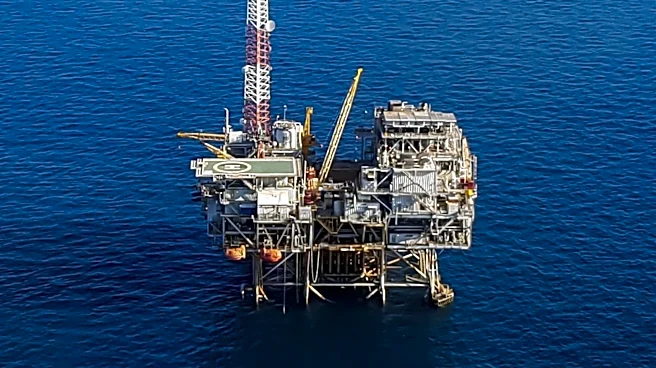
Treasury yields. The session saw gold's range between $4,075.90 and $4,167.00, maintaining its position above the $4,100 mark and testing the $4,140 to $4,200 resistance region. Silver also experienced a rise, trading near $59.72, up 1.80%. The broader market saw mixed results, with the S&P 500 slightly up, while the Nasdaq Composite and Dow Jones Industrial Average experienced minor declines. The rise in oil prices, with Brent crude closing at $94.07 and WTI at $86.83, has contributed to the inflation risk, impacting gold's potential upside.
Why It's Important?
The increase in gold prices highlights the ongoing market volatility influenced by geopolitical tensions and economic indicators. The rise in oil prices, driven by concerns over the Strait of Hormuz, adds to inflationary pressures, affecting both consumer prices and investment strategies. Higher Treasury yields reflect investor expectations of future interest rate hikes, which could impact borrowing costs and economic growth. The mixed performance in equity markets indicates uncertainty among investors, balancing between strong corporate earnings and the potential for increased inflation. This situation underscores the complex interplay between commodity prices, geopolitical risks, and economic policies, affecting a wide range of stakeholders from investors to policymakers.
What's Next?
Market participants are closely monitoring upcoming U.S. economic data, including the flash PMI and the Federal Reserve's policy decision next week. Any disruptions in the Strait of Hormuz or Red Sea shipping lanes could further impact oil prices and, consequently, inflation expectations. A sustained hold above $4,140 for gold could maintain its short-term recovery, while a drop below $4,080 might shift focus back to lower support levels. The Federal Reserve's communication will be crucial in shaping market expectations regarding interest rates and economic growth, influencing both commodity and equity markets.