






What's Happening?
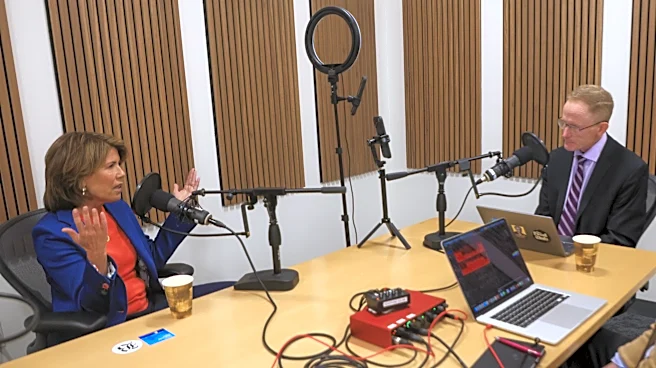
The Littler Lounge podcast recently featured an episode titled 'Midterms in the Rearview – What May Be Ahead for Employers,' where experts analyzed the implications of the recent midterm election results for U.S. employers. Claire Deason and Nicole LeFave
hosted the discussion, joined by Jim Paretti and Shannon Meade from Littler’s Workplace Policy Institute. The panel delved into the new political landscape post-midterms, examining potential changes and continuities in Washington D.C. They also discussed what employers should anticipate from federal agencies regarding workplace regulations and policies. A key point of the discussion was the expectation that significant workplace policy developments might increasingly originate from state and local levels over the next two years, rather than exclusively from federal initiatives.
Why It's Important?
This discussion is crucial for U.S. employers as it provides insights into the evolving regulatory environment that will directly impact their operations and compliance strategies. The shift in focus towards state and local policy developments means businesses will need to monitor a more fragmented and potentially diverse set of regulations, increasing the complexity of compliance. Understanding what to expect from federal agencies is also vital for anticipating changes in areas such as labor laws, worker protections, and employment standards. The analysis helps employers prepare for potential shifts in hiring practices, compensation, benefits, and workplace safety protocols, allowing them to proactively adjust their strategies to mitigate risks and ensure adherence to new legal requirements. This foresight is essential for maintaining operational stability and avoiding legal challenges in the coming years.
What's Next?
Employers should prepare for a dynamic period where workplace policy changes may be more localized and varied across different states and municipalities. This necessitates a more granular approach to legal and regulatory monitoring, potentially requiring increased resources for compliance teams. Federal agencies will likely continue to pursue their agendas, but the scope and pace of new federal regulations might be influenced by the new political landscape. Businesses should anticipate potential shifts in enforcement priorities and guidance from agencies like the Department of Labor and the Equal Employment Opportunity Commission. Furthermore, industry associations and legal counsel will play an increasingly important role in helping employers navigate this complex environment, providing updates and strategic advice on emerging workplace policy trends at all levels of government.
Beyond the Headlines
The trend of increased policy development at state and local levels could lead to a more diverse and potentially inconsistent regulatory framework across the U.S. This fragmentation might pose challenges for national companies operating in multiple jurisdictions, requiring them to adapt to a patchwork of different rules. It also highlights a broader shift in governance, where states and localities are taking more proactive roles in addressing social and economic issues, including those related to the workplace. This could foster innovation in policy-making but also create compliance burdens for businesses. The discussion implicitly touches upon the ongoing debate about federal versus state authority in regulating commerce and labor, suggesting a period where local governance gains more prominence in shaping the daily realities of American workplaces.