






What's Happening?
The restaurant industry is increasingly focusing on the overall dining experience rather than solely on food. This shift involves integrating elements like ambiance, service, personalization, and interactive formats into the core strategy. Restaurants
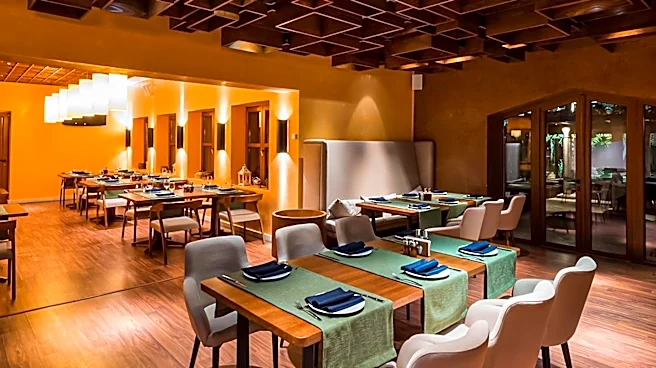
are recognizing that while food quality remains paramount, the 'servicescape'—the physical environment including layout, lighting, temperature, music, and scent—significantly influences customer satisfaction. Research indicates that lighting is a strong predictor of satisfaction, followed by scent and music. Operators are also leveraging personalization, not just through technology but by remembering customer names, usual orders, or preferred tables, which makes guests feel valued. Interactive dining experiences, such as chef's counters and open kitchens, are gaining traction, allowing customers to participate in the culinary process. Furthermore, menu design is evolving to create a sense of urgency, with seasonal offerings and limited-time specials encouraging repeat visits and anticipation among diners. This strategic approach aims to make the entire guest journey, from reservation to departure, seamless and memorable.
Why It's Important?
This evolving trend in the restaurant industry has significant implications for businesses across the U.S. It signals a move beyond product-centric competition to a more holistic, experience-driven model, which can differentiate establishments in a crowded market. For consumers, this means a richer, more engaging dining experience that extends beyond the plate. For restaurant owners and operators, it necessitates a re-evaluation of investment priorities, shifting focus from just kitchen equipment to interior design, staff training in customer recognition, and subtle technological integrations that enhance service without being intrusive. The emphasis on sustainability and local sourcing, often highlighted in seasonal menus, also aligns with growing consumer demand for ethical and environmentally conscious businesses. This strategic pivot can lead to increased customer loyalty, higher table turnover through efficient operations, and ultimately, improved profitability. Businesses that fail to adapt to this experience-first approach risk falling behind competitors who are actively curating every aspect of the customer journey.
What's Next?
Restaurants are expected to continue refining their 'servicescape' and personalization strategies. This will likely involve further investment in sophisticated lighting systems, sound design, and scent marketing to create specific moods and atmospheres. Technology will play a crucial, yet often invisible, role in streamlining operations, managing reservations, tracking customer preferences, and facilitating faster payments. The integration of AI for personalized recommendations and inventory forecasting will become more common. We can anticipate a rise in unique, interactive dining formats that offer customers a more immersive experience, moving beyond traditional table service. Seasonal and limited-time menus will become standard practice, driving repeat business and creating a dynamic culinary landscape. Training for front-of-house staff will increasingly emphasize soft skills like observation, memory, and genuine interaction to foster a sense of personal connection with diners. The industry will also likely see more collaborations with local artists, farmers, and musicians to create unique social and cultural spaces, further expanding the definition of what a restaurant can be.
Beyond the Headlines
The shift towards an experience-driven restaurant model reflects broader societal changes, where consumers increasingly value authenticity, personalization, and memorable moments over mere consumption. This trend has ethical implications, as restaurants must balance the desire for unique experiences with fair labor practices for staff who are central to delivering these experiences. The focus on 'servicescape' also highlights the psychological impact of physical environments on human behavior and satisfaction, extending beyond dining to other service industries. Culturally, this evolution could lead to a richer tapestry of dining establishments, each offering a distinct narrative and atmosphere, moving away from homogenized chain experiences. The emphasis on creating urgency through seasonal menus also taps into psychological principles of scarcity and anticipation, influencing consumer behavior in subtle ways. Ultimately, this trend suggests a redefinition of hospitality, where the emotional and sensory aspects of an encounter are as crucial as the tangible product, fostering deeper connections between businesses and their patrons.