





What's Happening?
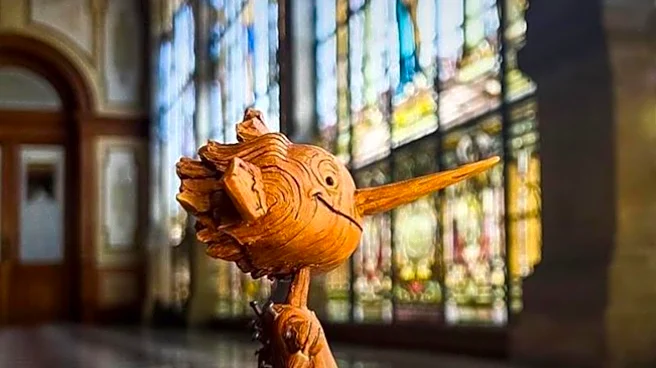
Matte Cooper, a director specializing in high-end stop-motion animation and puppetry, advocates for incorporating human imperfection and tactile elements in his work. He believes that the physical nature of puppets, governed by physics, introduces a healthy
set of restrictions that contribute to realism and creativity. Cooper highlights the value of puppeteers as actors who can respond to direction and generate spontaneous ideas on set, offering flexibility in creative approaches. He notes that the audience gains an enriched experience from seeing the 'human fingerprint' behind the work, comparing it to the thrill of a magic trick derived from practical props or effects. Cooper's projects often involve handcrafted worlds and characters, such as a towering IKEA puppet or hand-puppeteered Snapple drinks, emphasizing the enjoyment he derives from creating tangible objects that can be physically manipulated.
Why It's Important?
Matte Cooper's approach underscores a significant trend in the creative industries, particularly in advertising and entertainment, where there's a growing appreciation for authentic, handmade elements amidst a digitally saturated landscape. His emphasis on human imperfection and tactile artistry offers a counter-narrative to the pervasive use of computer-generated imagery (CGI), suggesting that physical methods can provide a unique layer of realism and emotional connection that digital techniques sometimes lack. This perspective is crucial for U.S. industries seeking to differentiate their content and engage audiences more deeply. By prioritizing practical effects and puppetry, Cooper demonstrates a viable and impactful alternative that can foster immediate performance on camera and create a distinctive atmosphere, potentially influencing production choices and artistic directions in film, television, and advertising.
What's Next?
Cooper is actively exploring new collaborations, including a project with a dancer, aiming to transpose the dancer's movement into his work, further integrating human elements. He is also interested in creating advertising that exists in public spaces, using sculptural or performance-based approaches documented in unique ways, as a reaction to the overwhelming digital information flow. This suggests a potential shift towards more experiential and interactive forms of advertising and art in public spheres. His continued experimentation without a brief allows him to rehearse ideas that can be applied to future projects, indicating an ongoing evolution in his craft. Cooper's work also highlights the importance of strong collaborative relationships in production, particularly with producers, to navigate the entire creative process from pitch to delivery.
Beyond the Headlines
Cooper's work delves into the deeper philosophical implications of art creation in the digital age. His preference for puppetry over CGI, despite acknowledging the merits of both, speaks to a desire for authenticity and the tangible. This choice reflects a broader cultural yearning for connection with the 'real' in an increasingly virtual world. The 'human imperfection' he champions is not merely a stylistic choice but a recognition of the inherent beauty and relatability in the handmade, contrasting with the often flawless, yet sterile, nature of purely digital creations. This perspective challenges the notion that technological advancement always equates to superior artistic output, suggesting that the constraints and physical demands of traditional methods can paradoxically unlock greater creativity and emotional resonance. His work implicitly advocates for a balanced approach, where technology serves as a tool to enhance, rather than replace, the fundamental human touch in artistic expression.