









What's Happening?
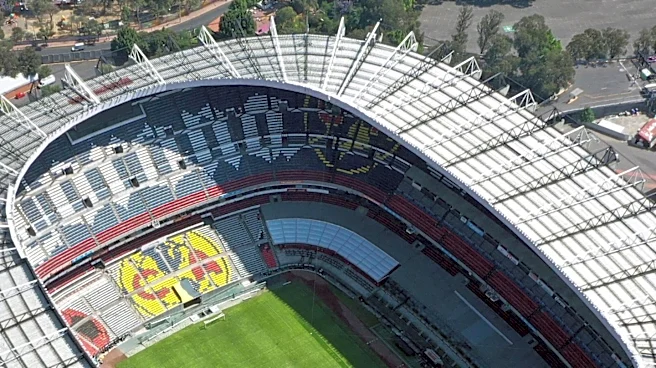
Mexico City's Azteca Stadium, known for its historical significance in world soccer, will host matches during the 2026 FIFA World Cup. The stadium is situated at an altitude of approximately 2,240 meters (7,350 feet) above sea level, making it one of the highest
venues for the tournament. This elevation presents unique challenges for visiting teams, as the thinner air can affect players' stamina and the flight of the ball. Coaches must consider these conditions when planning training sessions and game strategies. The stadium's altitude is a significant factor in how teams prepare for matches, influencing everything from player conditioning to tactical decisions.
Why It's Important?
The high altitude of Azteca Stadium can significantly impact the performance of teams not accustomed to such conditions. Players may experience quicker fatigue due to reduced oxygen levels, affecting their ability to maintain high-intensity play. This can alter the dynamics of matches, particularly in the knockout stages where teams are evenly matched. The conditions also affect the ball's trajectory, requiring players to adjust their techniques. As a result, teams must adapt their training and strategies to cope with these challenges, potentially influencing the outcomes of critical World Cup matches.