





What's Happening?
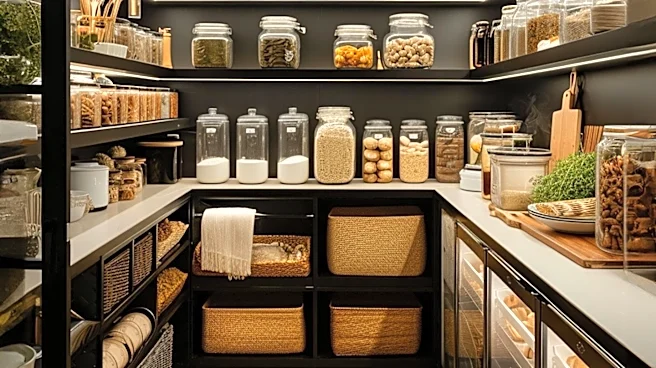
Various strategies for pantry organization are being shared, focusing on maximizing space and efficiency in the kitchen. These methods include creative storage solutions for spices, rice, snacks, and other pantry staples. One approach involves repurposing
spice jars for everyday items, while another emphasizes efficient ways to store bulk ingredients like chia seeds and rice. The goal is to create a tidier and more functional home environment by implementing practical tips that keep ingredients fresh and easily accessible. These organizational hacks often involve utilizing vertical space, clear containers, and labeling systems to ensure everything has a designated place. The discussions also cover broader kitchen organization, including cabinet arrangement and decluttering techniques to maintain an orderly cooking space.
Why It's Important?
Effective pantry organization is crucial for efficient kitchen management and overall household functionality. A well-organized pantry reduces food waste by making it easier to see and use ingredients before they expire, saving money and contributing to sustainability. It also streamlines meal preparation, as cooks can quickly locate necessary items, reducing stress and time spent in the kitchen. For families, an organized pantry can promote healthier eating habits by making nutritious options more accessible and visible. Furthermore, a tidy kitchen environment can positively impact mental well-being, creating a more pleasant and less chaotic living space. These organizational strategies empower individuals to take control of their kitchen environment, fostering a sense of order and calm in daily routines.
What's Next?
The trend in pantry organization is likely to evolve with new product innovations and smart home integrations. We can expect to see more modular and customizable storage solutions designed to fit various pantry sizes and needs. Technology may play a larger role, with smart labels or inventory systems that track expiration dates and automatically generate shopping lists. Social media platforms will continue to be a primary channel for sharing new hacks and aesthetic organization ideas, driving demand for visually appealing and functional products. Workshops and online courses on home organization may also become more prevalent, offering detailed guidance on implementing these strategies. The focus will remain on creating sustainable, easy-to-maintain systems that adapt to changing household needs.
Beyond the Headlines
Beyond the practical benefits, pantry organization reflects deeper cultural values related to domesticity, control, and well-being. The act of organizing can be a form of self-care, providing a sense of accomplishment and order in an often-chaotic world. It also highlights consumer trends, such as the preference for bulk buying and the desire for aesthetically pleasing home environments, often influenced by social media. Ethically, the emphasis on reducing food waste through better organization aligns with broader environmental consciousness and responsible consumption. The pursuit of the 'perfect' pantry can also inadvertently create pressure or unrealistic expectations for some individuals, underscoring the need for practical, achievable solutions rather than aspirational ideals. Ultimately, pantry organization is more than just tidiness; it's a reflection of how individuals manage their resources, time, and personal space.